Talladega Crash Shocking: 25 Cars Destroyed
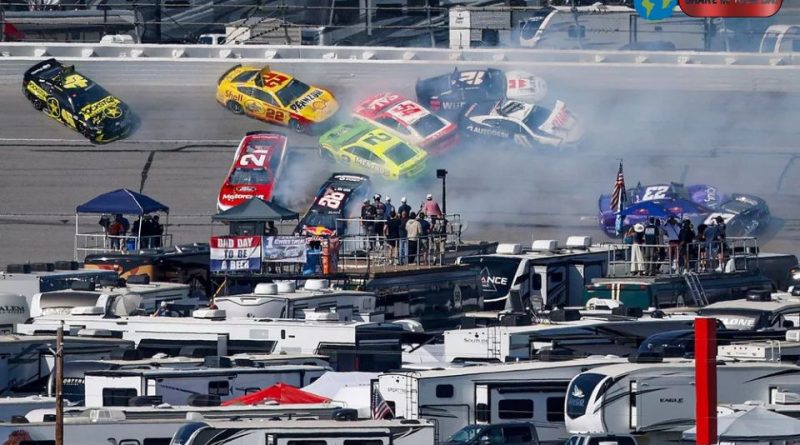
The latest Talladega Crash has sent shockwaves through the NASCAR world after a massive multi-car wreck destroyed more than 20 vehicles and forced a red flag during the race. The dramatic incident unfolded at Talladega Superspeedway, once again proving why the track is synonymous with chaos and unpredictability.
In a race already packed with tension and high-speed competition, the crash—often referred to as “The Big One”—became the defining moment of the event. With at least 25 cars involved, the scale of destruction was staggering, leaving teams scrambling and fans stunned.
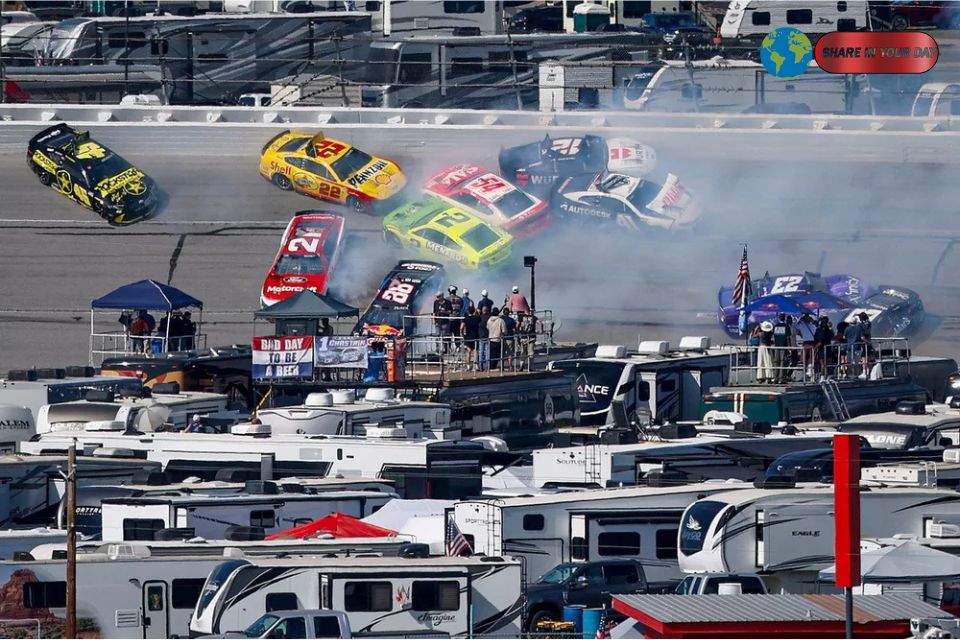
How the Talladega Crash Happened
The Talladega Crash erupted during a critical moment in the race, with drivers tightly packed in a high-speed draft. According to reports, the incident was triggered when Bubba Wallace, who was leading at the time, got turned amid aggressive positioning in the field.
That single moment set off a chain reaction.
Within seconds, cars began colliding across multiple lanes of the track. Drivers had little room to maneuver, and at Talladega’s extreme speeds—often exceeding 190 mph—avoiding contact becomes nearly impossible once a crash begins.
The result was a massive pileup involving over 20 cars, with debris scattered across the track. NASCAR officials were forced to halt the race under a red flag to allow for cleanup and safety checks.
The Scale of the Destruction
The magnitude of this Talladega Crash cannot be overstated.
Reports indicate that at least 25 cars were damaged or destroyed in the incident, wiping out a significant portion of the field.
Several top drivers were caught in the wreck, including championship contenders and fan favorites. The crash effectively reshaped the race, eliminating key competitors and opening the door for unexpected outcomes.
Moments like this highlight the razor-thin margin for error in NASCAR’s superspeedway racing.
Why Talladega Is So Dangerous
To understand why incidents like this Talladega Crash happen, it’s essential to look at the nature of Talladega Superspeedway itself.
Talladega is one of the fastest tracks in NASCAR, known for its long straights and steep banking. These characteristics create pack racing, where dozens of cars run closely together at high speeds.
While this produces thrilling action, it also increases the risk of large-scale accidents.
In fact, multi-car crashes—commonly known as “The Big One”—have become a defining feature of racing at Talladega and Daytona.
When one car loses control, it often triggers a domino effect that impacts much of the field.
A Familiar Yet Terrifying Scenario
Unfortunately, the Talladega Crash follows a pattern that NASCAR fans know all too well.
Earlier in the race, signs of instability were already present. Drivers were aggressively jockeying for position, using bump drafting and tight formations to gain an advantage.
Then, on a single lap, everything changed.
A similar incident earlier in the race had already collected a large number of cars, showing just how quickly chaos can unfold at this track.
The latest crash, however, escalated the situation to another level.
The Role of Bubba Wallace
Bubba Wallace’s involvement added another layer of drama to the Talladega Crash.
As the race leader at the time of the incident, Wallace was in a prime position to control the pace. However, in pack racing, even the leader is vulnerable.
After contact from another driver, Wallace was turned sideways, instantly becoming the center of the crash.
From there, the situation spiraled out of control.
While Wallace’s role was unintentional, it underscores how even minor contact can have massive consequences at Talladega.
NASCAR’s Safety Measures Put to the Test
Despite the severity of the Talladega Crash, one positive takeaway is the continued effectiveness of NASCAR’s safety advancements.
Modern stock cars are designed with reinforced structures, energy-absorbing materials, and advanced safety systems to protect drivers during high-impact collisions.
Additionally, track safety crews responded quickly, ensuring that all drivers received immediate attention.
While crashes of this scale are dramatic, they rarely result in serious injuries thanks to these ongoing improvements.
Impact on the Race Outcome
The Talladega Crash dramatically altered the trajectory of the race.
With so many cars eliminated, the competitive landscape shifted instantly. Drivers who avoided the wreck found themselves in advantageous positions, while others saw their race end prematurely.
In the end, the race resumed after cleanup, but it was no longer the same contest. Strategy, survival, and positioning became even more critical in the final laps.
Ultimately, the race concluded with a surprise winner emerging from the chaos, highlighting how unpredictable superspeedway racing can be.
The Bigger Picture: NASCAR’s “Big One” Phenomenon
The Talladega Crash is part of a broader trend in NASCAR known as “The Big One.”
This term refers to massive multi-car accidents that occur primarily at superspeedways. These incidents have been a part of NASCAR history for decades and are often both feared and anticipated by drivers and fans alike.
While they add excitement to the sport, they also raise ongoing questions about safety and race dynamics.
Some critics argue that pack racing inherently increases the likelihood of such crashes, while others believe it is an essential part of NASCAR’s appeal.
Fan Reactions and Social Media Buzz
As expected, the Talladega Crash quickly went viral across social media platforms.
Fans shared videos, reactions, and analysis, with many describing the incident as one of the most dramatic crashes in recent memory.
Some praised the drivers for their skill and resilience, while others expressed concern about the frequency of large-scale accidents at superspeedways.
Regardless of perspective, the crash has become one of the defining moments of the 2026 NASCAR season.
What Drivers Are Saying
In the aftermath of the Talladega Crash, drivers emphasized the unpredictable nature of racing at this track.
Many acknowledged that while the risks are high, it is part of what makes Talladega unique.
Drivers often enter these races knowing that survival is just as important as speed.
As one common sentiment suggests: “You’re not just racing the track—you’re racing the chaos.”
What Happens Next?
Following the Talladega Crash, teams now face the challenge of rebuilding and preparing for upcoming races.
Damaged cars will need extensive repairs, and some teams may even have to rely on backup vehicles.
Meanwhile, drivers will look to regroup mentally and physically after such an intense experience.
The NASCAR season continues, but the impact of this crash will likely be felt for weeks to come.
Final Thoughts
The Talladega Crash once again demonstrated the thrilling yet dangerous nature of NASCAR superspeedway racing.
With over 20 cars destroyed and the race temporarily halted, the incident serves as a powerful reminder of the sport’s unpredictability.
While fans are drawn to the excitement, moments like this highlight the fine line between competition and chaos.
As the season progresses, one thing is certain: Talladega will continue to deliver unforgettable—and sometimes shocking—moments.