Twenty years after one of astronomy’s most controversial decisions, the Pluto dwarf planet debate is still refusing to disappear. In August 2006, the International Astronomical Union (IAU) officially changed Pluto’s classification, ending its 76-year run as the ninth planet of the solar system.
The decision shocked millions of people who had grown up memorizing nine planets.
But Pluto did not suddenly become smaller.
Scientists changed the definition of what qualifies as a planet.
Today, Pluto remains officially classified as a dwarf planet. Yet the argument over whether that classification accurately represents the distant world has returned to the spotlight, particularly in 2026 as NASA Administrator Jared Isaacman has expressed support for revisiting the long-running controversy.
The debate is about more than Pluto’s name. It raises a fundamental question about how scientists should classify worlds in a solar system that continues to reveal new and surprising objects.
Pluto Dwarf Planet Status Began With a New Definition
When Pluto was discovered in 1930, astronomers had a much simpler picture of the solar system.
Pluto was considered the ninth planet for decades. It was small and distant, but its planetary status was rarely questioned by the general public.
That changed as astronomers discovered more objects beyond Neptune.
The outer solar system turned out to be filled with icy bodies occupying a vast region now known as the Kuiper Belt. Some were surprisingly large, and the discovery of Eris in 2005 became especially important because it was initially thought to be comparable to or even larger than Pluto.
Suddenly, astronomers faced a difficult question.
If Pluto was a planet, should Eris become the 10th planet?
And if Eris qualified, what about other large objects that might eventually be discovered?
The answer required scientists to establish a formal definition.
Why Pluto Was Reclassified in 2006
In August 2006, the IAU adopted a definition requiring a planet to meet three conditions.
First, it must orbit the Sun.
Second, it must have enough mass for its own gravity to pull it into a nearly round shape.
Third, it must have cleared the neighborhood around its orbit.
Pluto satisfies the first two requirements.
It fails the third.
Because Pluto shares its orbital region with numerous other objects in the trans-Neptunian region, the IAU placed it in a new category called a dwarf planet.
That decision reduced the officially recognized number of planets in our solar system from nine to eight.
For many people, however, the scientific explanation did little to ease the emotional reaction.
Pluto had been part of school lessons, astronomy books and popular culture for generations.
The phrase “ninth planet” had become deeply embedded in public memory.
Pluto Did Not Actually Change
One of the biggest misunderstandings surrounding the Pluto dwarf planet controversy is the idea that something physically happened to Pluto in 2006.
Nothing did.
Pluto did not lose mass.
Its orbit did not suddenly change.
Its surface did not become different.
The same distant world continued traveling around the Sun.
What changed was its classification.
The IAU’s decision effectively created a distinction between planets that dominate their orbital neighborhoods and smaller worlds that remain gravitationally associated with populations of other objects. NASA explains that Pluto is located in the Kuiper Belt, a distant region beyond Neptune containing numerous icy bodies.
In other words, Pluto’s demotion was a change in scientific terminology rather than a physical transformation.
That distinction remains central to the debate today.
The New Horizons Mission Changed Pluto Forever
If the 2006 decision changed Pluto’s label, NASA’s New Horizons mission changed humanity’s understanding of the world itself.
New Horizons became the first spacecraft to explore Pluto up close, completing its historic flyby in July 2015.
Before New Horizons arrived, Pluto was largely a mysterious point of light.
Scientists knew its basic orbital characteristics and had gathered observations from Earth-based telescopes and space observatories. But many details remained unknown.
The spacecraft changed that.
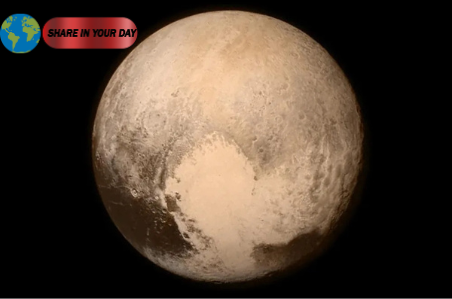
New Horizons revealed a surprisingly complex world with mountains, plains, glaciers and a distinctive heart-shaped region that quickly became one of the most recognizable images in modern planetary science.
The mission demonstrated that Pluto was far more geologically interesting than many people had expected.
That discovery also gave fresh energy to arguments that Pluto should be regarded as a planet in a broader scientific sense.
The Planet Debate Is Still Alive
The controversy did not end with the IAU vote.
Some planetary scientists have long argued that the definition used by the IAU focuses too heavily on orbital dynamics rather than the physical nature of a world.
Under an alternative approach, the fact that Pluto is round and geologically complex could be more important than whether it has cleared its orbital neighborhood.
That disagreement has created a genuine scientific debate rather than a simple public-versus-scientist argument.
EarthSky reported in May 2026 that scientists and the public continue to debate Pluto’s classification nearly two decades after the original decision.
Meanwhile, the IAU’s official position remains unchanged.
Pluto is a dwarf planet.
There has been no official reversal of the 2006 classification.
NASA’s Administrator Has Reignited Interest
The issue became particularly interesting in 2026 after NASA Administrator Jared Isaacman indicated support for revisiting Pluto’s status.
Scientific American reported in April that Isaacman had hinted at a campaign to reconsider the classification, coming two decades after Pluto was reclassified.
Nature likewise reported that his comments revived a debate that remains divisive among astronomers.
That does not mean Pluto is about to become the ninth planet again.
NASA does not control the official international definition of a planet.
The IAU is the organization responsible for the formal classification, meaning any change would require a broader scientific process.
Still, the comments are significant because they put one of the world’s most recognizable space organizations back into the conversation.
What Makes Pluto So Different?
Pluto is located in the Kuiper Belt, far beyond Neptune.
It takes Pluto roughly 248 Earth years to complete one orbit around the Sun. That means a human lifetime represents only a small fraction of a Plutonian year.
Its extreme distance also contributes to its unusual environment.
The dwarf planet is incredibly cold, and its surface contains volatile ices. It also has several moons, with Charon being by far the largest and most prominent.
NASA’s observations have shown that Pluto possesses a remarkably varied surface and atmosphere despite its small size.
That complexity is one reason scientists continue to study it.
Pluto may no longer be officially classified as a planet, but it remains an important natural laboratory for understanding the outer solar system.
Pluto’s Discovery Was a Turning Point
The story began in 1930 when astronomers at Lowell Observatory discovered Pluto.
At the time, scientists were searching for a possible ninth planet that could explain irregularities thought to exist in the orbit of Neptune.
Pluto’s discovery captured public attention immediately.
For decades, it represented the outer boundary of the known planetary system.
Then astronomy changed.
Better telescopes revealed that the solar system was much more complicated than the simplified diagrams found in school textbooks.
Objects beyond Neptune became increasingly important to planetary scientists. Pluto was no longer an isolated oddity.
It was part of a much larger population.
That realization ultimately made the old nine-planet model increasingly difficult to maintain.
Pluto’s Demotion Also Changed Astronomy Education
The Pluto dwarf planet story became a cultural event because the decision affected something people learned at a very young age.
Generations were taught that the solar system contained nine planets.
Then, almost overnight, the number became eight.
For teachers, textbook publishers and parents, the change created a memorable lesson in how science works.
Scientific knowledge is not simply a list of permanent facts.
Definitions can change when new evidence creates problems that an existing framework cannot handle.
The Pluto controversy is therefore useful beyond astronomy.
It demonstrates that scientific classification is designed to organize observations. When new discoveries expose weaknesses in an existing classification system, scientists may need to revise the system itself.
Could Pluto Become a Planet Again?
For now, the answer is no.
Pluto remains officially classified as a dwarf planet.
The IAU has not overturned its 2006 decision, and no new internationally accepted definition has replaced it.
However, the debate could continue.
A future scientific discussion could potentially produce a different definition of “planet.” If that happened, Pluto’s classification could be reconsidered along with other worlds.
But there is an important distinction between scientific debate and official status.
Scientists can disagree about the best definition without the formal classification changing.
That is where Pluto stands today.
The 20-Year Anniversary Is More Than Nostalgia
The anniversary of Pluto’s reclassification offers an opportunity to look at how much planetary science has changed since 2006.
At the time of the IAU decision, New Horizons was still traveling toward Pluto.
The spacecraft had not yet shown humanity what the distant world actually looked like.
Today, scientists have detailed images of its surface and a far better understanding of its environment. NASA describes New Horizons as the first—and so far only—mission to explore Pluto up close.
The scientific story therefore did not end with Pluto’s demotion.
In many ways, it was only beginning.
The spacecraft’s discoveries made Pluto more scientifically fascinating even as its official title became less grand.
What Pluto Teaches Us About the Solar System
Perhaps the most important lesson is that Pluto’s story is not really about losing a place in a list.
It is about discovery.
The solar system is not the simple collection of objects that appeared in older textbooks. It is a dynamic and complicated system containing planets, dwarf planets, moons, asteroids, comets and countless smaller bodies.
The discovery of Pluto helped expand humanity’s understanding of the outer solar system.
Its reclassification forced scientists to clarify what the word “planet” actually means.
And New Horizons showed that even a small world billions of kilometers from the Sun can contain an astonishing level of geological complexity.
That makes Pluto important regardless of what category appears next to its name.