Nepal Floods: Rescuers Race to Reach 900 Trapped Underground
The Nepal floods have triggered a desperate rescue operation as authorities race to reach hundreds of people believed to be trapped inside hydropower tunnels buried under mud, rocks and debris.
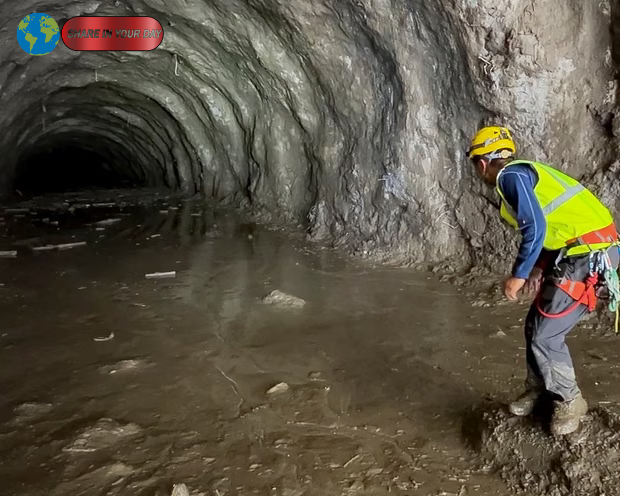
Nepal’s disaster management authorities said Monday that 933 people were missing from hydropower projects in flood-hit areas. The wider disaster has killed at least 903 people in Nepal, while more than 4,200 people remained missing, according to figures reported by authorities and cited by The Guardian. China has separately reported deaths and hundreds of missing people on the Tibet side of the border. TThe Guardian+1
The scale of the catastrophe has overwhelmed communities across the Himalayan region. Flash floods and mudslides swept through valleys, destroyed homes and infrastructure, and left rescue teams facing deep layers of mud blocking access to underground facilities.
For rescuers, every hour is critical.
Nepal Floods Leave Hydropower Workers Trapped
The most urgent rescue effort is focused on roughly half a dozen hydropower projects in Nepal, particularly in the hard-hit districts of Rasuwa and Nuwakot.
Many of the missing workers are believed to be underground. Tunnels and internal areas at several hydropower facilities have been filled or blocked by mud and rocks following the flooding.
Nepal Army spokesperson Raja Ram Basnet said the amount of debris inside the affected areas has created a major obstacle for rescue teams. Heavy equipment has been brought in to remove mud and rock while workers attempt to find safe routes into the tunnels. TThe Guardian+1
The challenge is not simply reaching the tunnel entrances.
Rescuers must also determine whether sections of the underground infrastructure remain structurally safe. Further movement of soil, water or rock could put rescue workers at risk.
Why the Hydropower Tunnels Matter
Nepal has invested heavily in hydropower because its mountainous terrain provides extensive river resources for electricity generation.
That development has resulted in numerous projects being built in steep valleys and mountainous regions. Underground tunnels are commonly used to divert or channel water toward turbines.
During a disaster of this scale, however, those tunnels can become extremely difficult places to search.
Mud can block entrances. Roads needed to transport excavators can be destroyed. Bridges can disappear beneath floodwaters. At the same time, rescuers have to work around unstable slopes and the possibility of additional flooding.
[Internal link: Nepal hydropower industry and energy infrastructure]
The current disaster is therefore not only a humanitarian emergency. It is also exposing the vulnerability of critical infrastructure in one of the world’s most mountainous countries.
Rescue Teams Face Deep Mud and Dangerous Conditions
Rescue workers have described extraordinary conditions inside the affected areas.
At the Chilime Hydropower site in Rasuwa, rescuers encountered mud reportedly reaching chest height in some locations. Teams used wooden planks and ropes to move through sections of the site while trying to determine how far the debris extended.
The conditions have made conventional rescue operations extremely difficult.
Heavy machinery can remove large quantities of material, but equipment cannot always reach every part of a blocked tunnel. Workers must sometimes proceed manually once excavators reach their limits.
There is also a critical question about survivors.
Some workers may have been able to reach protected areas within the hydropower facilities. Internal infrastructure could potentially provide pockets of safety, raising hopes that some missing workers may still be alive.
That possibility has kept rescue teams working despite the enormous risks.
Death Toll Rises as Search Operations Continue
The wider Nepal floods have already become one of the country’s most devastating recent disasters.
Nepalese authorities reported 903 deaths and 4,247 people missing as of Monday, including hundreds of foreign nationals. More than 90,000 people are estimated to have been affected, according to the Red Cross estimate cited in reports. TThe Guardian
The figures remain fluid because entire communities have been cut off and many victims have not yet been identified.
Hundreds of bodies have reportedly been recovered from areas downstream after being swept away by the torrent. Some were buried in shallow graves because of the difficulty of transporting and identifying victims amid the continuing emergency.
The human impact is being felt far beyond the immediate flood zones.
Families are searching for missing relatives. Residents are returning to destroyed homes to recover possessions. Businesses, roads and tourism facilities have been severely damaged.
In places such as Devighat, people have been walking through debris where houses once stood, attempting to salvage whatever remains.
India and China Assist With Tunnel Rescue
Although Nepal has indicated that it does not require broad foreign assistance for its general search-and-rescue operations, it has accepted specialized help from neighboring India and China for difficult tunnel rescues.
China has mobilized more than 2,100 rescue personnel and committed at least 220 million yuan, or about $33 million, for relief efforts, according to Chinese state media cited by Reuters. Chinese teams have also used life-detection equipment while supplies and equipment have been transported to affected areas. RReuters
The involvement of neighboring countries reflects the complexity of the operation.
Tunnel rescue requires specialized equipment and expertise. Rescuers must be able to locate people beneath large quantities of debris while maintaining access routes and protecting workers from secondary collapses.
India and China both have extensive experience with mountainous infrastructure and underground construction, making their technical support particularly valuable in the current emergency.
[Internal link: Nepal disaster response and emergency services]
Weather Has Complicated the Nepal Floods Rescue
Weather has repeatedly interrupted rescue operations.
Several rescue efforts were suspended because of poor weather and concerns about additional flooding. A newly formed lake near the Nepal-China border has also raised fears of another surge of water reaching downstream communities.
Those risks mean rescuers cannot simply work continuously.
Every operation has to balance speed against safety. If weather conditions deteriorate or water levels rise, teams may have to withdraw temporarily.
On Monday, however, improved weather allowed rescue operations to accelerate in some areas.
That window is particularly important for the people believed to be trapped underground.
What Caused the Catastrophic Flooding?
The disaster has also raised questions about the changing risks facing the Himalayas.
Chinese state broadcaster CCTV reported that the flooding was connected to glacier instability associated with long-term global warming. Reuters likewise reported that the disaster was attributed to a glacier collapse that sent ice, rocks, mud and debris through the region. TThe Guardian+1
Scientists have increasingly warned that a warming climate can alter conditions in high mountain environments.
Glacier retreat can change the stability of slopes and ice formations. Meltwater can accumulate behind unstable natural barriers, creating glacial lakes. If those barriers fail, enormous volumes of water can suddenly move downstream.
The result can be devastating in narrow Himalayan valleys.
However, determining the exact chain of events behind a particular disaster requires detailed scientific investigation. Authorities and researchers will need to examine glacier conditions, rainfall, landslides, river levels and other factors before reaching definitive conclusions.
Nepal Faces a Long Recovery
Even after the immediate rescue operation ends, Nepal will face a lengthy recovery.
The destruction of roads and bridges has complicated access to affected communities. Damage to hydropower infrastructure could also affect electricity generation and the broader economy.
An Associated Press report said the flooding had taken roughly 700 megawatts of generating capacity offline, equivalent to around 10% of Nepal’s capacity, highlighting the wider infrastructure consequences of the disaster. AAP News
Rebuilding will require more than simply replacing damaged structures.
Engineers and authorities are likely to face difficult questions about where future hydropower facilities should be located and how they should be designed to withstand increasingly complex hazards.
Flood defenses, early-warning systems, emergency access roads and evacuation plans could all become more important.
Nepal’s previous disaster experience has already demonstrated the importance of rapid warnings and reliable communication in mountainous terrain.
A Critical Test for Himalayan Disaster Preparedness
The Nepal floods are also highlighting a broader challenge across the Himalayas.
Mountain communities face multiple overlapping hazards. These include floods, landslides, avalanches, glacier-related events and earthquakes.
Climate change may intensify some of these risks, while rapid infrastructure development is placing more people and assets in vulnerable areas.
That combination creates a difficult planning problem.
Hydropower remains crucial to Nepal’s economic development and energy future. At the same time, projects located in steep and geologically complex terrain must account for hazards that can change over time.
The disaster could therefore become an important case study for future infrastructure planning across the region.
Rescue Efforts Continue Amid Hope for Survivors
For now, however, the priority remains much simpler: finding people who may still be alive.
More than 20,000 security personnel are involved in Nepal’s wider response, alongside civilian workers and volunteers, according to Prime Minister Balendra Shah. TThe Guardian
Excavators continue clearing debris. Rescue teams are examining tunnel entrances. Specialized personnel are searching underground areas where survivors could potentially be sheltering.
The operation is dangerous, slow and physically demanding.
But rescuers are working against time.
For families waiting for news, every cleared section of tunnel offers another possibility of finding a loved one. And until the affected sites have been fully searched, hopes for survivors remain.
The Nepal floods have already caused enormous loss of life and destruction across the Himalayan region. The immediate rescue operation will determine whether some of those still missing can be brought home alive.
The longer-term challenge will be ensuring that communities and critical infrastructure are better prepared for the next extreme event.