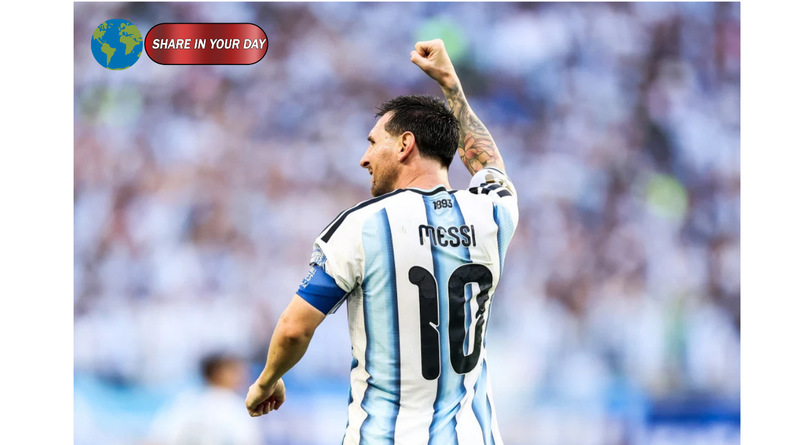
Lionel Messi Retirement Ends an Extraordinary Argentina Era
The Lionel Messi retirement from international football marks the end of one of the most remarkable careers in Argentina’s history.
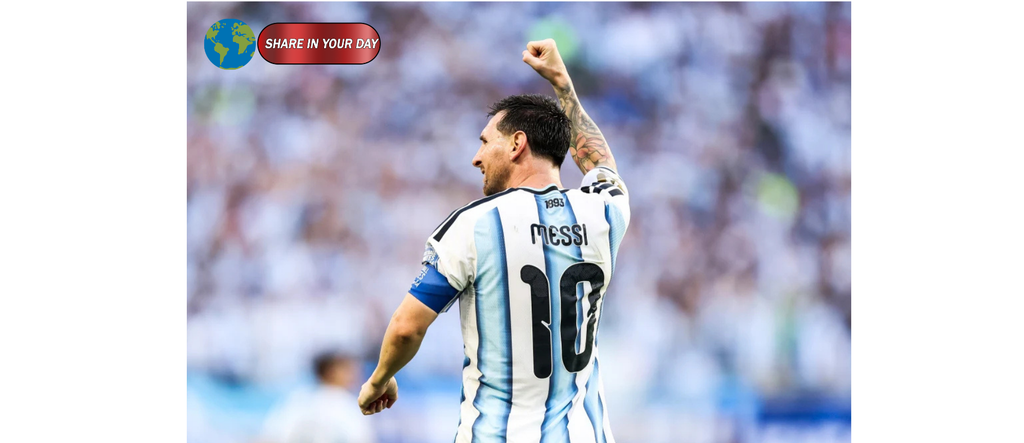
At 39, Messi has decided to step away from the national team after more than two decades wearing the famous blue and white shirt. His final appearance came in Argentina’s 1-0 extra-time defeat to Spain in the 2026 World Cup final.
The result was a painful ending for a player who had hoped to lift the trophy again. However, the defeat cannot overshadow what Messi accomplished during his extraordinary international career.
Messi finished with 207 appearances and 125 goals for Argentina. He leaves as the country’s most-capped player and its leading scorer. He also played in six World Cups, another remarkable milestone in a career filled with records. NNBC Sports+1
His retirement closes a chapter that included devastating defeats, emotional comebacks and, eventually, the trophies Argentina supporters had waited years to see.
Lionel Messi Retirement Comes After a Final World Cup Run
Messi entered the 2026 World Cup knowing that his international career was approaching its final stage.
There were questions about whether his body could handle another major tournament at such an advanced age. Instead, he once again produced moments that reminded football fans why he had dominated the sport for so long.
Argentina began its title defense with Messi playing a central role. He even scored a hat trick against Algeria in the opening match, becoming the first male player to appear at six different World Cups. NNBC Sports
His performances continued throughout the tournament.
Messi eventually finished the 2026 World Cup with eight goals and four assists. He also earned the Silver Ball after being named the tournament’s second-best player behind Spain midfielder Rodri. NNBC Sports
Argentina advanced all the way to the final.
That journey included a dramatic semifinal victory over England, with Messi helping create both of Argentina’s late goals in a 2-1 comeback. The result put Argentina within one victory of becoming only the third men’s team to win consecutive World Cups. NNBC Sports
But Spain had other plans.
Argentina lost 1-0 after extra time, ending its hopes of defending the title Messi had helped win four years earlier.
The defeat ultimately became the final match of his international career.
The Painful Beginning of Messi’s Argentina Story
Messi’s relationship with Argentina was not always filled with celebrations.
When he first became a global superstar, expectations surrounding him were enormous. Supporters wanted the same success with Argentina that he had enjoyed at Barcelona.
But international trophies proved difficult to find.
Argentina reached the 2014 World Cup final, only to lose to Germany in extra time. Messi was named the tournament’s best player, but the defeat remained one of the biggest disappointments of his career.
The frustration continued.
Argentina lost the 2015 Copa America final to Chile on penalties. One year later, the same teams met again in the Copa America final, and Chile once again won a penalty shootout.
That second defeat hit Messi particularly hard.
He briefly announced his retirement from international football.
For Argentina supporters, it appeared that the country’s greatest active player might never win a major senior trophy with the national team.
The story, however, was far from finished.
The Moment Everything Changed
Messi returned to Argentina duty and eventually helped create one of the greatest periods in the country’s football history.
The breakthrough arrived at the 2021 Copa America.
Argentina defeated Brazil in the final at the Maracana, giving Messi his first major senior international trophy.
It was an emotional moment.
For years, Messi had been judged against the achievements of Diego Maradona and other Argentine legends. Suddenly, the criticism began to fade.
Messi had finally won with Argentina.
But that was only the beginning.
The following year produced the defining achievement of his international career.
Messi Finally Wins the World Cup
The 2022 World Cup in Qatar became Messi’s greatest international triumph.
Argentina did not have an easy path.
The team suffered a shocking opening defeat against Saudi Arabia, putting immediate pressure on the tournament favorites.
Instead of collapsing, Argentina responded.
Messi delivered throughout the competition and eventually led his team to the final against France.
What followed became one of the most memorable matches in World Cup history.
Argentina and France finished 3-3 after extra time before Argentina prevailed in the penalty shootout.
Messi scored twice during the final and was eventually able to lift the World Cup trophy.
For Argentina, the victory ended a 36-year wait for another world title.
For Messi, it removed the one major trophy that had remained missing from his résumé.
The World Cup victory also changed the way his international career was viewed.
The player who had once been criticized for failing to win with Argentina was now a world champion.
Another Copa America Strengthened His Legacy
Messi did not retire after winning the World Cup.
He continued to represent Argentina and helped the team win another Copa America title in 2024.
That victory confirmed that Argentina’s success was not a one-tournament achievement.
The team had developed a winning mentality under coach Lionel Scaloni, while Messi had gradually evolved into a different kind of leader.
He no longer needed to dominate every match.
Instead, his experience allowed him to control games through passing, positioning and decision-making.
His physical decline was noticeable compared with the explosive player of his Barcelona years, but his football intelligence remained extraordinary.
That combination helped him continue competing at the highest level.
Six World Cups and a Record-Breaking Career
The scale of Messi’s international career is difficult to comprehend.
He played at six World Cups and became the tournament’s all-time appearance leader with 34 matches.
His 21 World Cup goals also placed him at the top of the competition’s scoring chart after the 2026 tournament. NNBC Sports
Those numbers are remarkable on their own.
But they become even more impressive when considering how long Messi maintained his place at the highest level.
His first World Cup came in 2006.
Twenty years later, he was still starting for Argentina in another World Cup final.
Few players in football history have managed anything comparable.
Lionel Messi Retirement Leaves Argentina Without Its Icon
Messi’s departure creates a major challenge for Argentina.
For more than 20 years, the national team had one player capable of changing a match with a single touch.
That responsibility will now pass to a new generation.
Argentina has talented players coming through, but replacing Messi is not simply a matter of finding another goalscorer.
His influence extended beyond goals.
He was the team’s creative center, captain and emotional reference point. Younger players grew up watching him and later shared the pitch with him.
The transition will therefore be significant.
Argentina must now build an identity that does not depend on its legendary No. 10.
Messi Leaves With His Legacy Secure
The Lionel Messi retirement may have arrived after a disappointing final result, but his legacy is not defined by that loss.
He leaves Argentina as a World Cup champion and a two-time Copa America winner.
He leaves as the country’s all-time leading scorer.
He leaves as its most-capped player.
He leaves after six World Cups and countless unforgettable performances.
Most importantly, Messi leaves having achieved the trophy that had once seemed impossible.
For years, Argentine supporters questioned whether their greatest player would ever experience international glory.
Eventually, he gave them everything they wanted.
The 2022 World Cup remains the defining image of his career with Argentina. Messi walking toward the trophy, surrounded by teammates and thousands of celebrating supporters, became a moment that will remain part of the country’s sporting history.
A Different Ending, But Still a Remarkable One
There was no perfect fairytale ending.
Argentina lost its final World Cup match.
Messi did not lift another trophy in his final appearance.
Yet football careers are rarely written exactly as supporters imagine.
The important part is everything that came before.
Messi endured years of criticism. He suffered painful final defeats. He briefly walked away from international football. Then he returned and helped Argentina win three major senior international titles.
That journey makes his retirement particularly significant.
He did not simply inherit a legendary status.
He fought through disappointment to earn it.
The End of an Era
Lionel Messi’s retirement from Argentina signals the end of one of football’s greatest international eras.
The player who once arrived as a teenage phenomenon leaves as a world champion, record holder and national icon.
Argentina will eventually find its next star.
But there will only ever be one Messi.
His career with the national team stretched from 2005 to 2026 and included 207 appearances, 125 goals, two Copa America championships and a World Cup title. NNBC Sports
Those achievements tell an extraordinary story.
The final chapter may have ended with disappointment, but the story itself could hardly have been more remarkable.
For Argentina, Messi’s blue-and-white journey is over.
For football history, however, his legacy is only beginning.