Trump White House Ballroom: Supreme Court Clears Way
The Trump White House ballroom project can move forward after the U.S. Supreme Court issued a narrow 5-4 ruling allowing construction to continue while a legal challenge proceeds. The decision represents an important victory for President Donald Trump, whose administration has defended the controversial project as both a major White House upgrade and a matter involving national security.
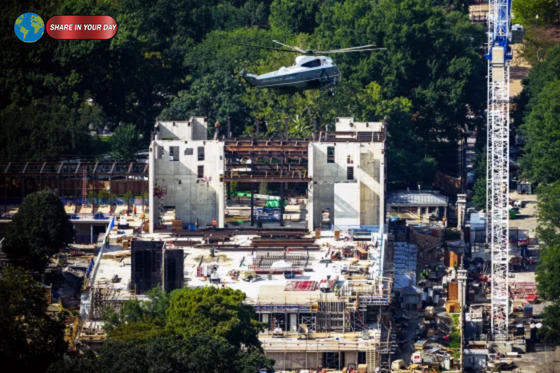
The Supreme Court’s decision does not finally determine whether the ballroom project is lawful. Instead, the justices allowed construction to continue while litigation brought by the National Trust for Historic Preservation moves through the courts.
The ruling immediately removed a major legal obstacle for the administration. Construction crews can continue above-ground work on the planned ballroom despite a lower-court order that had halted much of the project.
The dispute has become one of the most significant legal battles surrounding Trump’s efforts to reshape the White House and other major federal landmarks.
Trump White House Ballroom Construction Can Continue
The Supreme Court’s 5-4 decision came after the Trump administration asked the justices to intervene in the dispute.
The administration argued that stopping construction would cause serious and potentially irreversible harm. Justice Department lawyers also emphasized national security concerns connected with the planned complex.
The Supreme Court majority agreed to block the lower-court restriction for now.
The decision means construction can proceed while the broader legal questions remain unresolved.
That distinction is important.
The Supreme Court did not issue a final ruling declaring that Trump has unlimited authority to rebuild the White House. Instead, the justices focused heavily on whether the historic preservation group challenging the project had the legal standing necessary to bring its lawsuit.
According to reporting on the ruling, the majority concluded that the National Trust for Historic Preservation likely could not demonstrate the kind of concrete injury required to challenge the project in federal court.
Why the Trump White House Ballroom Is Controversial
The project has attracted intense attention because it involves the demolition of the White House’s historic East Wing and construction of a massive new ballroom.
The proposed ballroom is approximately 90,000 square feet, or about 8,360 square meters.
The Trump administration has estimated the project at roughly $400 million. Officials have said the project is being financed largely through private donations rather than ordinary taxpayer funding.
Trump has promoted the ballroom as a major addition to the presidential complex.
The administration has also argued that the new facility is necessary because the White House currently lacks sufficient space for large official events.
At the same time, officials have increasingly emphasized security concerns surrounding the project.
The Justice Department told the Supreme Court that the broader development is connected to an integrated security and military complex.
That argument has become central to the administration’s defense as opponents question whether the president can make such a significant change to the White House property without explicit congressional authorization.
White House East Wing Demolition Sparks Legal Fight
The legal dispute began after the Trump administration moved ahead with the project and demolished the East Wing.
The National Trust for Historic Preservation sued the administration, arguing that the government had not followed the required legal procedures before making such a major change to the historic White House complex.
The organization sought to stop construction.
Lower courts subsequently issued restrictions affecting above-ground construction.
The Trump administration appealed, arguing that the project should not be stopped and that delays could create significant problems.
The case eventually reached the Supreme Court, which temporarily allowed construction to continue before issuing its latest 5-4 decision.
The Supreme Court’s latest action is therefore another major step in a legal fight that is still not over.
Supreme Court Trump Ballroom Decision Is Not Final
One of the most important details of the ruling is what it does not decide.
The Supreme Court has not definitively ruled that Trump’s ballroom project complies with every federal law.
Instead, the decision allows construction to continue while the underlying litigation develops.
That means opponents of the project can still pursue legal arguments.
The broader question is whether the Trump administration had the authority to demolish the East Wing and undertake such a large-scale transformation of the White House grounds without specific approval from Congress.
A lower federal court previously concluded that Congress has an important role when major changes to federal property and federal spending are involved.
The administration disagrees with that interpretation.
The case therefore raises questions far beyond the ballroom itself.
Chief Justice John Roberts Dissents
Chief Justice John Roberts joined the three liberal justices in dissenting from the Supreme Court’s 5-4 decision.
The dissent highlights the sharp disagreement within the court over the legal and constitutional issues surrounding the project.
Roberts and the dissenting justices raised concerns about presidential authority and the role of Congress in decisions involving the White House.
The dissent reflects a broader debate over whether a president should be able to fundamentally alter a historic federal property without legislative authorization.
The majority took a different approach, focusing on the legal standing of the National Trust and the consequences of stopping construction at this stage.
The disagreement demonstrates why the ballroom project has become much more than an architectural renovation.
It is now also a debate over executive power, federal property and historic preservation.
Trump Administration Cites National Security
National security has become one of the administration’s strongest arguments for allowing construction to continue.
Justice Department lawyers have told the courts that the project is connected to security infrastructure and that delaying construction could create risks.
The administration has pointed to threats against the president and the need for improved security facilities.
The planned complex is expected to include underground facilities and other security-related infrastructure.
Trump has described the project as an important security development and has strongly criticized court efforts to slow the construction.
However, opponents argue that national security should not automatically exempt the administration from federal laws governing historic properties and government construction.
That disagreement remains at the center of the legal battle.
A 90,000-Square-Foot Ballroom
The scale of the planned Trump White House ballroom has also fueled public debate.
At approximately 90,000 square feet, the ballroom is a major addition to the presidential complex.
The administration has said the space will provide a permanent location for large formal events.
Trump has repeatedly promoted the project as a landmark improvement to the White House.
The ballroom is expected to accommodate hundreds of guests and provide facilities for state dinners, diplomatic events and other major presidential functions.
Supporters say the White House needs a modern facility capable of hosting large events without relying on temporary structures or facilities elsewhere in Washington.
Critics, meanwhile, argue that the scale of the development could fundamentally change the historic character of the White House grounds.
What Happened to the White House East Wing?
The East Wing had served important functions at the White House for decades.
It was associated with the first lady’s office, social events and other administrative activities.
The structure was demolished to make way for the new development.
The decision to remove the East Wing became a central point of criticism from preservation advocates.
Opponents argue that the White House is not simply another federal building. It is an important national historic site whose architecture and surrounding grounds have symbolic importance.
The Trump administration has maintained that the redevelopment will ultimately modernize the complex while creating a more useful and secure facility.
The Supreme Court ruling now means construction can continue as those competing visions remain under debate.
What the Supreme Court Ruling Means for Construction
For construction crews, the decision removes an immediate obstacle.
Work on the ballroom can continue rather than being frozen while the lawsuit proceeds.
That matters because the administration has been moving quickly to complete the project.
According to court filings cited in recent reporting, the broader East Wing development was already substantially advanced when the administration sought Supreme Court intervention.
A construction stoppage could have resulted in delays, additional costs and potential complications for work already underway.
The Supreme Court majority therefore allowed the project to continue while the legal case remains active.
For Trump, the decision represents a major short-term victory.
For preservation groups, however, the legal fight is far from finished.
National Trust Says Legal Battle Continues
The National Trust for Historic Preservation has opposed the project and challenged the administration’s actions in federal court.
The organization’s position is that the White House cannot simply be transformed without following the legal procedures designed to protect historic federal properties.
The group has argued that demolishing the East Wing and constructing the ballroom represent changes that require greater congressional and regulatory oversight.
The Supreme Court’s latest ruling does not necessarily prevent those arguments from being raised in further proceedings.
Instead, the immediate effect is that construction can proceed while the dispute continues.
That creates an unusual situation in which the physical project may advance significantly before the courts finally resolve all of the legal questions.
Trump Calls Ballroom Project a Historic Achievement
Trump has repeatedly praised the ballroom and presented it as a signature project of his presidency.
He has said the facility will be among the finest of its kind and has described the development in terms of both prestige and security.
After the Supreme Court’s action, Trump welcomed the decision.
The president has also attacked lower-court rulings that previously restricted construction, describing opposition to the project as politically motivated.
The White House has emphasized that the ballroom is intended to serve future presidents, not simply Trump’s personal use.
That argument is likely to remain part of the political debate surrounding the project.
Why the Case Matters Beyond Trump
The Trump White House ballroom dispute could have consequences beyond the current construction project.
At its heart is a question about how much authority a president has to change one of America’s most important federal properties.
If presidents can make major structural changes without Congress, future administrations could potentially inherit broader authority over federal landmarks.
If Congress must approve significant alterations, the ballroom case could reinforce legislative control over federal property.
The dispute therefore touches on the separation of powers.
It also raises questions about the balance between historic preservation, presidential authority and national security.
Those questions could remain important even after the ballroom itself is completed.
When Could the White House Ballroom Be Finished?
The administration has previously projected a timetable extending into Trump’s current presidential term.
Recent reporting indicates that construction has been proceeding rapidly, with the administration seeking to avoid further interruptions.
However, the ultimate completion date could still be affected by litigation, construction requirements and changes to the project.
The Supreme Court’s decision makes an immediate construction halt less likely, but it does not eliminate every potential legal or practical obstacle.
The project will therefore remain under close scrutiny in Washington.
What Happens Next in the Trump White House Ballroom Case?
The legal battle is expected to continue despite the Supreme Court’s decision.
The National Trust for Historic Preservation and other opponents can continue challenging the administration’s authority through the remaining legal process.
At the same time, construction can proceed under the Supreme Court’s latest order.
That means the legal case and physical construction will continue simultaneously.
The courts will eventually have to address the deeper questions surrounding the project’s authority, federal property rules and the role of Congress.
For now, however, Trump has won a critical battle.
The Supreme Court’s 5-4 ruling allows his administration to continue building the ballroom while the broader dispute plays out.
Trump Ballroom Project Marks Major Supreme Court Victory
The Supreme Court’s decision gives the Trump administration a significant boost in its effort to complete the Trump White House ballroom.
The $400 million project has already transformed the eastern side of the presidential complex and sparked a major debate over historic preservation and presidential power.
With the court allowing construction to continue, workers can proceed with above-ground development while the National Trust’s legal challenge remains unresolved.
But the ruling should not be interpreted as a final declaration that every aspect of the project is legal.
Instead, it is a decision allowing construction to move forward while the courts continue considering the broader dispute.
The controversy is therefore unlikely to disappear soon.
The ballroom may eventually become one of the most visible physical legacies of Trump’s second presidency. At the same time, the legal battle surrounding its construction could become an important test of how far presidential authority extends when a president seeks to reshape a historic national landmark.
For now, the message from the Supreme Court is clear: the construction can continue.
The final legal verdict on the project’s authority, however, has yet to be written.