Iceland Security Partnerships: 5 New Paths After EU Vote
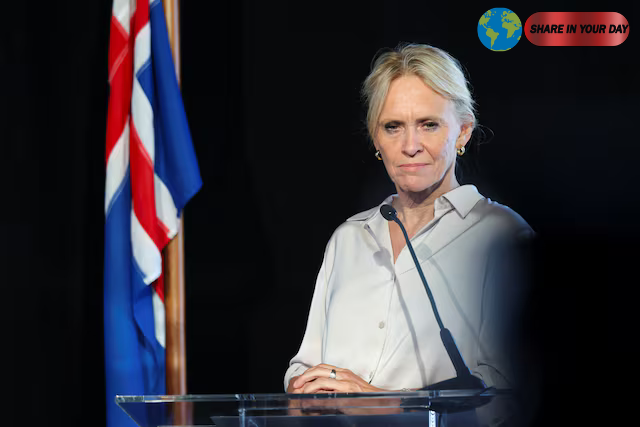
Iceland security partnerships have moved to the center of the country’s foreign policy debate after voters rejected a proposal to restart negotiations on joining the European Union. The referendum result may have closed the door on renewed accession talks for now, but Iceland’s geopolitical challenges have not disappeared.
Instead, Reykjavik is now considering other ways to strengthen its position in an increasingly uncertain international environment. Icelandic Foreign Minister Þorgerður Katrín Gunnarsdóttir said the country must explore stronger bilateral cooperation while continuing to deepen its relationship with the European Union.
The debate comes at a particularly important moment for Iceland. The North Atlantic and Arctic regions are gaining greater strategic importance, while questions surrounding NATO, relations with the United States and security in Europe have created new concerns for smaller countries.
Iceland has no standing army, making international alliances a critical part of its national security strategy. The country’s decision to remain outside the EU does not mean it can ignore the changing geopolitical environment around it.
1. Iceland Security Partnerships Become a Major Priority
The referendum showed that a majority of Icelandic voters did not want their government to restart EU membership negotiations. Official results showed that 52.8% voted against reopening the talks, while 47.2% supported the proposal. Voter turnout reached approximately 82.5%, underlining the importance of the issue to the country’s population.
However, the result did not eliminate the security concerns that helped bring the question of closer European integration back into Icelandic politics.
Foreign Minister Gunnarsdóttir made clear that the geopolitical environment remains unchanged regardless of the referendum result. Iceland must therefore consider alternative approaches to strengthening its security.
This could include deeper cooperation with individual countries as well as continued engagement with European institutions.
The Iceland security partnerships strategy is especially important because the country occupies a highly strategic position in the North Atlantic. Its location between North America and Europe has long given it significance in transatlantic security planning.
2. Bilateral Cooperation Could Offer a New Security Path
One of the most significant possibilities for Iceland is expanding bilateral agreements with key international partners.
According to Reuters, Iceland is considering stronger cooperation with countries including Finland, Norway, Japan and Canada. These relationships could help Reykjavik diversify its international security connections without requiring full membership in the European Union.
Such partnerships could involve cooperation in several areas, including:
- Arctic and North Atlantic security
- Intelligence and information sharing
- Cybersecurity
- Maritime surveillance
- Emergency preparedness
- Infrastructure protection
- Diplomatic cooperation
For Iceland, bilateral relationships may provide greater flexibility than joining a larger political bloc.
The country has traditionally placed significant value on maintaining its independence. That concern was also one of the major issues during the campaign over restarting EU accession talks.
By expanding Iceland security partnerships individually, the government could potentially strengthen national resilience while avoiding some of the political compromises associated with EU membership.
3. NATO Remains Central to Iceland’s Defense
Despite having no standing military, Iceland is a member of NATO and has historically depended heavily on international security cooperation.
The country’s defense relationship with the United States has been particularly important. Iceland and the U.S. have maintained a longstanding defense agreement dating back to 1951.
Nevertheless, recent uncertainty surrounding international politics has encouraged Icelandic leaders to think about strengthening additional partnerships.
The broader discussion is not necessarily about replacing NATO. Instead, it reflects concerns about whether smaller countries should rely too heavily on a limited number of security relationships in an increasingly unpredictable world.
Diversification could therefore become an important element of Iceland’s future strategy.
Stronger Iceland security partnerships with Nordic countries could be particularly significant. Finland and Norway already have extensive experience dealing with regional security challenges, while Canada shares Iceland’s interests in Arctic affairs.
The North Atlantic is becoming more strategically important as geopolitical competition intensifies. As a result, cooperation between countries with shared regional interests may become increasingly valuable.
4. Iceland Will Continue Working Closely With the EU
Rejecting renewed accession negotiations does not mean Iceland is turning away from Europe.
Iceland is already deeply connected to the European Union through the European Economic Area, which has provided access to the EU’s single market since 1994. The country is also closely integrated with European institutions through other agreements.
The referendum result therefore preserves the existing relationship rather than creating a complete break between Iceland and the EU.
Political leaders across Iceland’s major parties have reaffirmed the importance of the European Economic Area framework. This allows the country to maintain extensive economic ties with Europe without becoming an EU member.
The government can also continue developing cooperation with the European Union on areas that do not require full membership.
This could include security, climate policy, technology, infrastructure and other strategic issues.
The future of Iceland security partnerships may therefore involve a combination of bilateral agreements, NATO cooperation and closer sector-specific relationships with the EU.
5. The EU Referendum Reflected Concerns Over Sovereignty
The campaign surrounding the referendum demonstrated that Iceland’s EU debate involves much more than security.
Opponents of reopening accession talks expressed concerns about sovereignty and control over the country’s fishing industry. Fisheries remain economically and culturally important to Iceland, making the issue particularly sensitive during discussions about European integration.
Supporters of renewed talks argued that exploring membership could offer Iceland greater economic and geopolitical stability.
However, opponents believed the country already benefits from close access to European markets through the EEA without needing to surrender additional national authority.
The narrow referendum result illustrates how divided Iceland remains on the issue.
Although the “No” side won, the difference between the two sides was relatively small. Nearly half of voters supported restarting the negotiations.
This suggests that the debate over Iceland’s relationship with the EU may not disappear permanently.
For now, however, the government has promised to respect the outcome and not proceed with the accession process.
Why the Arctic Is Becoming More Important
The future of Iceland security partnerships cannot be separated from the changing geopolitical importance of the Arctic.
The region has attracted growing attention from major powers because of its strategic geography, natural resources and potential shipping routes.
Iceland sits in a location that gives it an important role in North Atlantic and Arctic affairs.
As competition increases, smaller countries may face greater pressure to balance relationships with larger powers while protecting their own national interests.
This makes international cooperation essential.
Iceland’s approach could increasingly focus on building a broad network of trusted partners rather than depending on a single security arrangement.
Countries such as Norway, Finland and Canada may become particularly important because they share regional interests and experience in Arctic policy.
Meanwhile, Iceland will continue to maintain its relationship with the United States and other NATO members.
What the Referendum Means for Iceland’s Foreign Policy
The immediate consequence of the vote is clear: Iceland will not restart EU accession negotiations.
However, the country’s foreign policy must now address the same geopolitical pressures that helped revive the EU debate in the first place.
This creates an important challenge for Reykjavik.
The government must find ways to strengthen national security while respecting the democratic decision made by voters.
A broader network of Iceland security partnerships could provide one solution.
Rather than choosing between complete EU membership and international isolation, Iceland can pursue multiple forms of cooperation.
The country can remain active in NATO, strengthen bilateral relationships, continue benefiting from the EEA and work with the EU on selected areas of mutual interest.
This multi-layered approach could offer Iceland more flexibility in a rapidly changing geopolitical environment.
Iceland’s Relationship With Europe Is Far From Over
The referendum result should not be interpreted as a rejection of Europe itself.
Iceland remains closely connected to the continent economically, politically and culturally.
The country already participates in the European single market through the EEA and maintains extensive ties with its Nordic neighbors.
Instead, voters rejected one specific proposal: restarting negotiations on full EU membership.
That distinction will be important in the years ahead.
Iceland’s leaders may now focus on strengthening practical cooperation without reopening the politically divisive membership debate.
This could allow the country to maintain close European ties while responding to concerns about sovereignty.
The government’s ability to balance those priorities will likely define the next phase of Icelandic foreign policy.
A New Era for Iceland Security Partnerships
The rejection of renewed EU accession talks has not reduced Iceland’s need for international cooperation.
If anything, the referendum has created greater pressure on the government to demonstrate how it intends to address growing geopolitical uncertainty through other means.
The future strategy is likely to involve several layers of cooperation.
NATO will remain a central security pillar. The United States will continue to be an important defense partner. Nordic and Arctic cooperation could expand, while bilateral relationships with countries such as Canada and Japan may also receive greater attention.
At the same time, Iceland is expected to continue its close relationship with the European Union through the EEA and other frameworks.
This approach may allow Reykjavik to strengthen its international position without pursuing full EU membership.
The result could be a more diversified foreign policy built around Iceland security partnerships rather than a single major political alliance.
Conclusion: Iceland Searches for Security Beyond EU Membership
Iceland’s referendum has delivered a clear political message: voters do not currently support restarting negotiations to join the European Union.
Yet the security concerns facing the country remain.
The geopolitical situation in the North Atlantic and Arctic continues to evolve, while uncertainty surrounding major international powers has increased the importance of reliable partnerships.
As a result, Iceland security partnerships are likely to become one of the country’s most important foreign policy priorities.
Reykjavik now faces the challenge of building stronger relationships with trusted allies while maintaining the independence that many voters sought to protect.
The answer may lie in a broader and more flexible network of bilateral, regional and multilateral cooperation.
Iceland may have rejected a new path toward EU membership, but it has not rejected international engagement. Instead, the country is entering a new phase in which security, sovereignty and strategic partnerships will increasingly shape its future.
Suggested external source: Reuters’ coverage of the Iceland referendum and the country’s evolving security strategy.
Suggested internal link: Link to a relevant article on your website covering Arctic security, NATO, European geopolitics or Iceland’s foreign policy.