Full Article
Trump Film Tax Incentive Gains Momentum in Washington
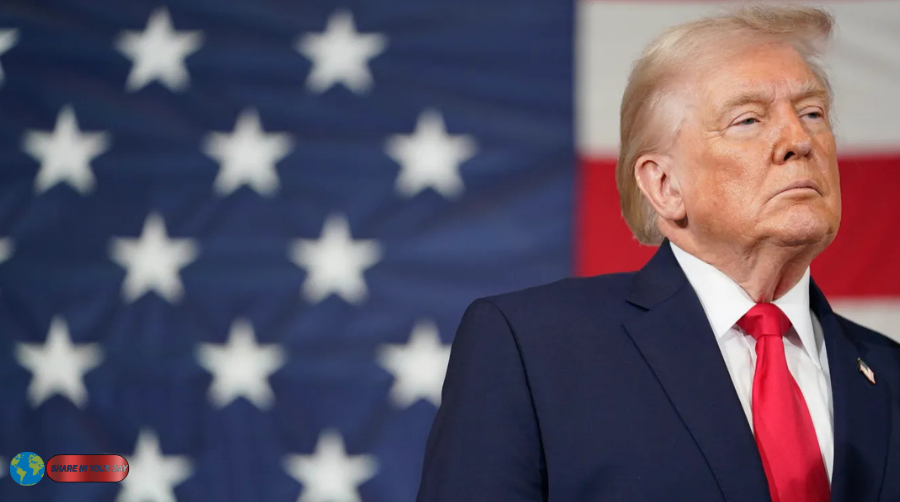
The Trump film tax incentive proposal is gaining fresh attention after President Donald Trump called on Congress to create a federal tax incentive for film and television production in the United States.
Trump’s latest position represents a significant development for an industry that has spent years warning about the loss of American production to competing locations overseas. In a recent social media post, Trump urged lawmakers to work together on legislation designed to strengthen the domestic entertainment business.
The president’s support comes after months of lobbying from Hollywood studios, unions, producers and industry advocates. The push has also attracted support from some Republicans, despite long-standing political tensions between Trump and parts of the entertainment industry.
The central argument behind the proposal is straightforward: American productions are increasingly competing against jurisdictions that offer substantial financial incentives to filmmakers.
A federal tax credit could potentially reduce the cost of making movies and television shows in the United States, making domestic locations more competitive with Canada, the United Kingdom, Hungary and other production centers.
However, Congress still has to determine the details. Trump’s endorsement does not itself create a federal tax credit, and lawmakers would need to pass legislation before a new program could take effect.
Trump Film Tax Incentive Could Target Production Jobs
One of the biggest goals of the Trump film tax incentive is bringing more production work back to the United States.
Film and television production generates employment across a broad range of industries. Actors and directors are only part of the workforce. Productions also require electricians, carpenters, drivers, costume professionals, makeup artists, camera crews, editors, caterers, location managers and numerous other workers.
Supporters argue that encouraging productions to remain in the U.S. could therefore have an impact far beyond Hollywood studios.
Reuters reported that a proposal being promoted by producer Steven Paul and SP Media Group President Scott Karol would provide a federal tax credit equal to 20% of qualifying labor costs for film and television productions made in the United States. The proposal could also provide an additional 5% incentive for independent productions or projects filmed in designated areas.
The exact structure of any final federal program could change substantially during the legislative process.
Still, the emphasis on labor costs is significant.
Rather than simply rewarding a studio for spending money in America, a labor-based credit could be designed to encourage productions to hire U.S. workers and keep more of their production activity inside the country.
Why Hollywood Wants a Federal Film Tax Credit
Hollywood has long relied on state-level incentives to compete for productions.
States including California, Georgia, New York and others have created programs designed to attract movies and television shows. International competitors have developed similar systems, sometimes offering major financial advantages to productions willing to film locally.
The result is a highly competitive global production market.
A studio deciding where to film a major movie can consider labor expenses, studio facilities, transportation, local infrastructure, government incentives and currency differences.
Even when a story is set in Los Angeles or New York, the actual production may take place somewhere else.
That phenomenon is commonly described as “runaway production.”
The federal proposal is intended to address part of that problem by adding a nationwide incentive on top of existing state programs.
Industry supporters believe that combination could make U.S. locations more attractive without completely replacing state incentives.
Trump Film Tax Incentive Comes After Years of Debate
The idea of a federal film tax credit is not new.
Lawmakers and entertainment-industry representatives have discussed federal production incentives for years. The issue has become more urgent as production has expanded in countries and regions that actively compete for Hollywood projects.
In July 2026, The Hollywood Reporter reported that the federal tax-credit effort had developed bipartisan support, including interest from Republican lawmakers.
That bipartisan dimension could be crucial.
Hollywood has historically been associated with Democratic politics, which can make proposals to provide government incentives to entertainment companies politically complicated for Republicans.
But supporters have increasingly framed the issue as an economic-development measure rather than a cultural subsidy.
The argument is that film and television production creates jobs, supports local businesses and brings spending to communities.
That framing could make the proposal more attractive to lawmakers who might otherwise be reluctant to provide financial incentives to Hollywood.
Jon Voight Has Played a Role in the Push
Actor Jon Voight has been one of the most visible advocates for a federal entertainment tax incentive.
Voight met with Trump earlier in 2026 to discuss the issue and has worked with industry figures supporting a federal credit. Reuters reported that the proposal associated with Voight’s advocacy calls for a 20% federal credit on qualifying U.S. production labor costs, with the possibility of additional credits under certain conditions.
Trump’s latest endorsement followed continued lobbying from people involved in the entertainment industry.
The involvement of industry unions and major trade organizations also illustrates how broad the coalition has become.
Reuters reported that the Motion Picture Association, Directors Guild of America and entertainment unions have been involved in efforts to advance the proposal.
That matters because the success of a federal tax incentive will depend heavily on congressional support.
The Trump Film Tax Incentive Is Not Yet Law
One of the most important details for audiences to understand is that Trump’s announcement is not the same thing as Congress passing a tax credit.
The president can support and encourage legislation, but Congress must approve the underlying policy.
The eventual legislation would have to establish important details, including:
- Which productions qualify
- How much of a tax credit companies can claim
- Which labor costs are eligible
- Whether foreign financing affects eligibility
- Whether independent productions receive additional benefits
- How the credit interacts with state incentives
- Whether television, streaming and theatrical productions receive the same treatment
- How much federal funding the program could ultimately cost
These details could determine whether the program becomes a major force in Hollywood or remains relatively limited.
The proposal could also face political resistance.
Some lawmakers may question whether wealthy studios and entertainment companies should receive federal tax benefits. Others could argue that federal incentives would simply shift production around the country rather than meaningfully increase total U.S. production.
Those debates will likely become more important if Congress begins writing actual legislation.
Why Production Has Moved Overseas
The push for a federal incentive comes against the backdrop of a major transformation in global entertainment production.
Countries such as Canada and the United Kingdom have established themselves as major production centers partly because of financial incentives, infrastructure and experienced crews.
Some U.S. states have also competed aggressively for productions.
This creates a difficult situation for American filmmakers.
A production may have strong creative or historical reasons to shoot in California, but the financial calculation can favor another location.
For a studio working with a massive budget, even a relatively modest percentage difference can represent millions of dollars.
A federal incentive could narrow that gap.
However, it is unlikely to eliminate the economic reasons studios have built permanent international production operations.
Large entertainment companies have already invested in overseas studios, crews and infrastructure. Those investments are not likely to disappear simply because Washington creates a new tax credit.
The Proposed Credit Could Help Independent Filmmakers
Large studios are likely to receive much of the attention surrounding the Trump film tax incentive, but independent filmmakers could also benefit.
Independent productions generally operate with much smaller budgets and have less flexibility when costs rise.
A tax credit tied to production labor could therefore have a meaningful effect on whether an independent movie can be financed and produced domestically.
Some proposals have specifically discussed additional incentives for independent films.
The idea is to create a stronger financial advantage for productions that might otherwise struggle to compete with larger studio projects.
If Congress ultimately adopts such a structure, independent producers could have greater flexibility when choosing U.S. locations.
That could also support smaller production companies, local crews and businesses that depend on filmmaking activity.
California Could See a Major Impact
California is likely to remain central to the debate.
Los Angeles has historically been the heart of the American entertainment industry, but the state has faced intense competition from other states and international locations.
California already offers its own film and television incentive program.
A federal credit could potentially work alongside California’s existing system, making local production more financially competitive.
At the same time, other states could benefit as well.
A federal program would not necessarily force productions back to Los Angeles. Instead, it could encourage more domestic production generally.
That means states with established studios, experienced crews and competitive local incentives could become even more attractive.
Could the Trump Film Tax Incentive Bring Hollywood Back?
The short answer is that it could help, but no single tax incentive is guaranteed to reverse Hollywood’s production challenges.
Tax credits can reduce costs, but studios also consider other factors.
These include:
- Availability of sound stages
- Skilled local crews
- Production infrastructure
- Weather
- Transportation
- Housing
- Insurance
- Local regulations
- Existing studio facilities
- International distribution requirements
A federal credit addresses one major factor: cost.
It does not automatically solve every logistical issue.
The strongest impact would likely come if the federal government combines the incentive with existing state programs and a broader strategy for maintaining America’s entertainment infrastructure.
Trump’s Previous Film Tariff Proposal Was Different
The current tax-incentive approach is also notable because it represents a different policy mechanism from Trump’s earlier proposals involving foreign film tariffs.
In 2025, Trump discussed imposing extremely high tariffs on films produced outside the United States. The proposal generated significant debate because of the complicated international nature of modern film production.
A tax credit takes a different approach.
Instead of making foreign production more expensive, the government would make qualifying domestic production less expensive.
That could be easier for studios to incorporate into their financial planning.
Industry groups have therefore increasingly focused on incentives rather than restrictions.
What Happens Next?
The next major step is congressional action.
Trump has called for bipartisan legislation, but lawmakers will need to negotiate the size, structure and eligibility requirements of any federal incentive.
The entertainment industry will likely continue lobbying for a strong program.
Studios and unions have an obvious financial interest in the outcome, while lawmakers will have to weigh those arguments against concerns about federal spending and tax policy.
The exact percentage of any eventual credit could also change.
Current industry proposals have centered around a 20% credit for qualifying U.S. production labor costs, but that figure should not be treated as final legislation.
If Congress moves forward, the debate could become one of the most consequential entertainment-industry policy discussions in Washington.
Trump Film Tax Incentive Could Reshape U.S. Production
The renewed push for a Trump film tax incentive marks an unusual moment in the relationship between Washington and Hollywood.
Despite years of political tension between Trump and the entertainment industry, there is now a shared economic argument for keeping more film and television production inside the United States.
The proposed federal credit could potentially help producers reduce labor costs, encourage domestic hiring and make American locations more competitive with overseas production centers.
But the proposal remains unfinished.
Congress must still determine whether to create the program, how generous it should be and what conditions productions would have to meet.
For Hollywood, however, Trump’s endorsement is already significant.
A federal film and television incentive has moved from a long-running industry proposal into a more prominent national policy debate.
If lawmakers succeed in turning the proposal into legislation, the effects could reach far beyond movie studios. Local crews, independent filmmakers, production companies, hotels, restaurants, equipment suppliers and other businesses could all benefit from increased domestic production.
The biggest question now is not whether Hollywood wants the incentive.
It is whether Congress can agree on a version that delivers meaningful benefits to the U.S. entertainment industry while winning enough bipartisan support to become law.