Zelenskyy Plane Drone Incident Raises New Aviation Fears
A Zelenskyy plane drone incident has raised fresh concerns about the expanding risks of Russia’s war in Ukraine after a drone reportedly came dangerously close to the Ukrainian president’s aircraft as it was leaving Moldova.
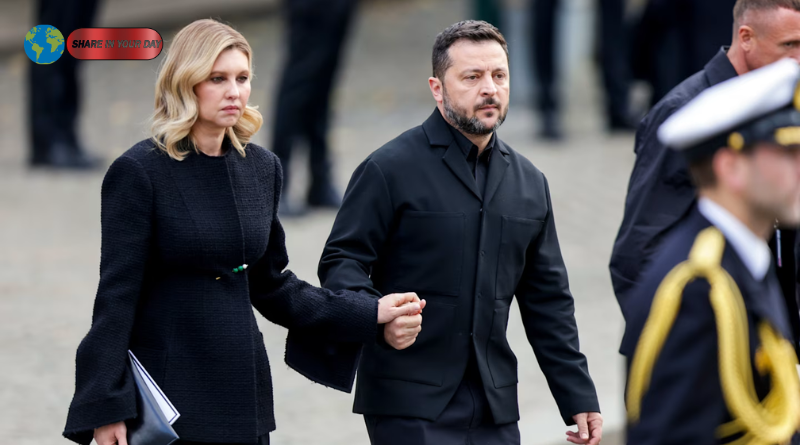
The incident happened Tuesday as Volodymyr Zelenskyy was traveling from Moldova to Norway. According to Ukrainian officials and Norwegian Prime Minister Jonas Gahr Støre, the presidential aircraft was nearly struck by a drone during its departure from Chișinău.
No one aboard the aircraft was injured, and the plane was not damaged. However, the episode has highlighted how Russia’s expanding use of drones is creating risks far beyond Ukraine’s battlefield.
Moldovan authorities temporarily closed the country’s airspace after detecting a drone crossing into Moldovan territory. The alert delayed flights and prompted heightened security around Chișinău International Airport.
The incident is particularly significant because Moldova is not a member of NATO and has sought to avoid becoming directly involved in the war. Yet the country has increasingly found itself exposed to the consequences of Russia’s attacks on neighboring Ukraine.
What Happened to Zelenskyy’s Plane?
The Zelenskyy plane drone incident unfolded as the Ukrainian president was traveling to Norway to attend the funeral of King Harald V.
Norwegian Prime Minister Jonas Gahr Støre confirmed that Zelenskyy’s aircraft had nearly been hit by a drone as it was preparing to take off from Moldova.
A senior Ukrainian official traveling with the president said the drone was believed to have been a Russian Shahed-type weapon equipped with a jet engine.
The exact distance between the drone and Zelenskyy’s aircraft has not been publicly disclosed. Støre also did not say that the aircraft had definitely been targeted.
That distinction is important.
While Ukrainian officials indicated that the drone came close enough to raise concerns that it could have been targeting the presidential aircraft, there is currently no publicly established evidence proving that Zelenskyy’s plane was deliberately targeted.
Ukrainian authorities are investigating the circumstances.
The aircraft eventually continued its journey to Norway. Zelenskyy later met Støre in Oslo before attending the funeral.
Moldova Temporarily Closed Its Airspace
The drone incident also disrupted aviation in Moldova.
Moldovan authorities said they temporarily closed the country’s airspace after a Russian drone entered Moldovan territory. The measure was taken as authorities assessed the potential threat.
According to reporting on the incident, the drone entered Moldova from the direction of Ukraine before continuing across the region.
One drone eventually exploded near Mihăileni, in Moldova’s Rîșcani district, roughly 160 kilometers from Chișinău International Airport.
The incident demonstrated how quickly a drone attack directed at Ukraine can become a problem for neighboring countries.
For Moldova, the situation is especially sensitive.
The country borders Ukraine and has repeatedly warned that Russia’s war is creating security risks for Moldovan territory. President Maia Sandu has previously emphasized the need for stronger national defense capabilities as missiles and drones associated with the war have crossed into or fallen on Moldovan territory.
Was the Drone Targeting Zelenskyy?
One of the biggest unanswered questions surrounding the Zelenskyy plane drone incident is whether the aircraft itself was the intended target.
At this stage, there is no definitive public evidence that it was.
The Ukrainian official traveling with Zelenskyy reportedly believed the drone came close enough to raise the possibility that it had been aimed at the presidential aircraft.
But drones can travel unpredictable routes, especially during large-scale attacks involving electronic warfare, air-defense systems and multiple weapons.
A drone crossing several national borders does not automatically establish its intended target.
That is why investigators are expected to examine radar data, flight paths, communications and the weapon itself before drawing conclusions.
The distinction matters politically as well as militarily.
A deliberate attempt to strike a Ukrainian presidential aircraft outside Ukraine would represent a major escalation. It would also raise questions about the safety of international aviation across Eastern Europe.
For now, officials have stopped short of making such a claim.
The Growing Reach of Russia’s Drone War
The Zelenskyy plane drone scare comes as Russia has intensified the use of drones and missiles against Ukraine.
Russian forces have increasingly relied on large waves of unmanned aerial vehicles to attack Ukrainian cities, infrastructure and military targets.
Some drones have also crossed or approached the borders of neighboring countries.
That creates a difficult problem for European governments.
A drone launched toward Ukraine may unintentionally or deliberately cross into another country’s airspace. Once that happens, authorities must determine whether it represents an immediate threat to civilian aircraft, military facilities or people on the ground.
The consequences can be serious.
Commercial aircraft operate across the region every day. A drone traveling through a busy aviation corridor can create a collision risk even if it was never intended to hit a passenger plane.
The threat becomes even more complicated when military drones are designed to fly long distances.
Why Jet-Powered Drones Matter
Ukrainian officials described the suspected weapon as a Shahed-type drone powered by a jet engine.
That detail is significant because Russia has increasingly used faster drone variants in attacks against Ukraine.
Traditional Shahed-style drones are already difficult targets for air-defense systems because of their low cost and ability to be deployed in large numbers.
Faster versions can create additional challenges.
A high-speed drone can reduce the time available for detection, identification and interception. That becomes especially important when the weapon is operating close to civilian airports or international borders.
The incident involving Zelenskyy’s aircraft illustrates the problem.
Even if the drone was not deliberately targeting the Ukrainian president, its presence near an aircraft carrying a head of state created a potentially dangerous situation.
A New Challenge for Moldova
Moldova has tried to maintain its security while avoiding direct involvement in the war.
However, geography makes that increasingly difficult.
The country sits between Ukraine and Romania, a NATO and European Union member. Its proximity to the conflict means that Russian missiles and drones operating near Ukraine can pose risks to Moldovan territory and airspace.
Moldova has previously reported incidents involving drones and missile debris.
The government has also sought closer security cooperation with European partners.
President Maia Sandu has repeatedly argued that Moldova needs stronger defense capabilities because the war next door has direct consequences for national security.
The latest incident adds another layer to those concerns.
The problem is no longer limited to objects falling on Moldovan territory. A drone entering Moldovan airspace can also disrupt airports and civilian aviation.
The Chișinău Airport Security Concern
Airports are particularly sensitive to drone activity.
Even a relatively small unmanned aircraft can create serious problems if it enters an area used by passenger planes.
The temporary closure of Moldova’s airspace demonstrates how authorities may respond when they cannot immediately determine the location or intentions of a potentially hostile drone.
For travelers, that can mean flight delays, diversions and cancellations.
For governments, the stakes are considerably higher.
Officials must balance the need to protect civilians against the economic and logistical consequences of shutting down airspace.
The presence of Zelenskyy’s aircraft made the situation even more sensitive.
A presidential plane carrying a national leader requires additional security measures. Any unidentified aerial threat near its flight path must be treated seriously until authorities determine that it is no longer dangerous.
No Damage or Injuries Reported
Despite the seriousness of the incident, there were no reports of damage or injuries aboard Zelenskyy’s aircraft.
That is an important point.
The episode should not be described as an attack that successfully targeted the Ukrainian president. Rather, available information indicates that a drone came dangerously close to the aircraft and triggered a significant security response.
The aircraft was ultimately able to continue to Norway.
Zelenskyy’s schedule also continued, including his meeting with Støre and his attendance at the funeral of King Harald V.
The absence of casualties does not eliminate the broader concern.
A near miss involving a drone and a presidential aircraft demonstrates how warfare can create unexpected dangers for civilian and government aviation far from the front lines.
The Incident Comes at a Sensitive Moment
The Zelenskyy plane drone scare also occurred at a sensitive moment in diplomatic efforts surrounding the war.
International attempts to revive negotiations between Russia and Ukraine have continued while fighting remains intense.
Recent diplomatic activity has included contacts involving US officials and visits to both Moscow and Kyiv.
Yet the battlefield situation remains volatile.
Russia has continued launching drone and missile attacks against Ukrainian targets, while Ukraine has carried out long-range strikes against Russian infrastructure and military assets.
That combination means the danger to neighboring countries is unlikely to disappear quickly.
Even when diplomats are negotiating, military operations can continue.
A Warning for European Aviation
Perhaps the most important lesson from the incident is that the war in Ukraine increasingly affects European airspace.
The risk is not limited to Ukraine.
Drones and missiles have previously raised concerns in countries bordering the conflict, particularly Romania and Moldova. NATO countries have had to monitor objects entering or approaching their airspace while maintaining civilian aviation operations.
That creates an increasingly complicated security environment.
European governments must invest in detection systems capable of identifying small, fast-moving objects. They also need clear rules for deciding when a drone represents a threat and how it should be intercepted.
The challenge is particularly difficult near airports.
A military response that protects an airport must also avoid creating additional risks for passenger aircraft and people on the ground.
What Happens Next?
The immediate priority for Ukrainian and Moldovan authorities will be establishing exactly what happened.
Investigators will likely examine the drone’s route, its type, its flight characteristics and the circumstances surrounding its disappearance from radar.
The question of whether the drone was intentionally targeting Zelenskyy’s aircraft will be particularly important.
So far, officials have not publicly established that it was.
The broader issue, however, is already clear.
Russia’s expanding drone campaign is increasing the possibility that weapons launched during the war will cross international borders and enter areas used by civilian aircraft.
For Moldova, that means strengthening its airspace monitoring and defense capabilities will remain an urgent issue.
For Ukraine, the incident is another reminder that senior officials remain vulnerable even when traveling outside the immediate battlefield.
And for Europe, the episode shows that the consequences of the war are no longer confined to the front lines.
The Bigger Picture
The Zelenskyy plane drone incident may ultimately be remembered as a near miss rather than a successful attack.
But near misses matter.
A drone that comes close to a presidential aircraft can expose weaknesses in regional airspace monitoring, create uncertainty for airports and force governments to make rapid security decisions.
The episode also illustrates how modern warfare increasingly operates across borders.
Drones can travel hundreds of kilometers. They can cross national boundaries in minutes. Their relatively low cost allows militaries to deploy them in large numbers, increasing the likelihood that some will enter unexpected areas.
For countries such as Moldova, which sit close to the conflict but are not directly participating in it, that creates a difficult security challenge.
The aircraft carrying Zelenskyy escaped the incident without damage or casualties.
Nevertheless, the warning is unmistakable: as drone warfare expands, the boundary between a battlefield and civilian airspace is becoming increasingly difficult to maintain.
For European governments, the challenge will be to ensure that the next drone crossing a border does not come even closer to a passenger or presidential aircraft.