Strait of Hormuz Crisis 2026: 7 Shocking War Developments Reshaping Global Power
The Strait of Hormuz crisis 2026 has rapidly evolved into one of the most consequential geopolitical events of the decade. As tensions between Iran, the United States, and regional allies intensify, the strategic waterway—responsible for transporting roughly 20% of the world’s oil—has become the focal point of a global economic and military standoff.
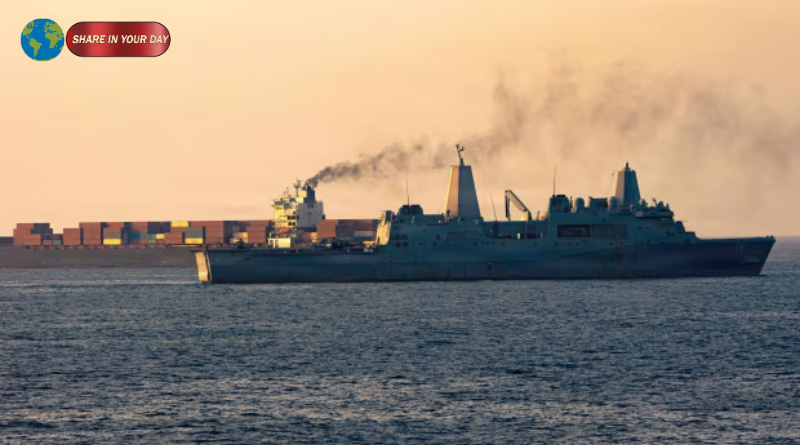
From new maritime policies to rising oil prices and shifting war strategies, the latest developments reveal a conflict that is no longer regional—it is global. Below are seven critical updates shaping the crisis.
1. Iran Introduces a New Maritime Regime
In a dramatic policy shift, Iran has announced the end of free passage through the Strait of Hormuz. Iranian officials confirmed that all vessels must now pay a toll to transit the waterway, marking a historic change after nearly five decades of open navigation.
This move signals Iran’s intention to transform the strait into a controlled economic and strategic asset. By imposing fees, Tehran is effectively asserting sovereignty over one of the world’s most critical shipping routes.
However, the policy has sparked immediate backlash. The United States has rejected any attempt by Iran to “normalize” control over the strait, arguing that it is an international waterway that must remain open to all nations.
2. Oil Prices Surge as Tensions Escalate
Global energy markets have reacted swiftly. Oil prices have surged amid growing fears of supply disruption. Recent data shows Brent crude climbing above $107 per barrel, while U.S. crude also jumped significantly.
The reason is clear: uncertainty.
Military confrontations, tanker seizures, and shipping restrictions have created a volatile environment. Iran’s actions, combined with U.S. countermeasures, have effectively reduced oil flows and heightened speculation.
Historically, the Strait of Hormuz has been a chokepoint. Any disruption sends shockwaves through global markets. In 2026, those shockwaves are becoming seismic.
3. Insurance Costs for Ships Skyrocket
Shipping companies are facing another major challenge: skyrocketing insurance costs.
War-risk insurance premiums for vessels passing through the strait have jumped dramatically—from around 0.25% in peacetime to as high as 8% during the conflict.
Even more controversial, insurers are now requiring ships to follow Iranian-approved routes to qualify for coverage. This effectively forces international shipping companies to comply—at least indirectly—with Iran’s new rules.
The result is a logistical nightmare. Ship operators must navigate not only physical danger but also legal and financial uncertainty.
4. The Strait Is Effectively Blocked
Despite conflicting claims from different sides, the reality on the ground is clear: the Strait of Hormuz is not functioning normally.
Military activity, including ship seizures and naval patrols, has severely restricted traffic. In many cases, vessels are avoiding the area entirely due to safety concerns.
Earlier in the conflict, Iran declared control over the strait and warned that unauthorized ships could face attack. This led to a near-total halt in traffic at several points during the war.
Although limited movement has resumed at times, the situation remains unstable and unpredictable.
5. A High-Stakes Military Standoff
The crisis is not just economic—it is deeply military.
The United States has deployed naval forces and imposed a blockade on Iranian ports, aiming to counter Iran’s control of the strait.
Meanwhile, Iran has used drones, naval units, and strategic positioning to maintain pressure. Reports indicate that both sides have engaged in aggressive maneuvers, including intercepting vessels and targeting shipping routes.
This has turned the Strait of Hormuz into a potential flashpoint for direct confrontation between major powers.
6. Iran Proposes a Conditional Deal
Amid rising tensions, Iran has offered a proposal that could potentially ease the crisis.
The plan includes ending attacks in the strait in exchange for a complete cessation of hostilities and the lifting of U.S. blockades.
However, the proposal comes with conditions. Nuclear negotiations would be postponed, and the terms of managing the strait would need to align with Iran’s interests.
So far, there has been no official acceptance from the United States. Analysts remain skeptical, suggesting that fundamental disagreements remain unresolved.
7. Global Economy Faces Unprecedented Pressure
The broader impact of the Strait of Hormuz crisis 2026 cannot be overstated.
The disruption has already triggered:
- Rising global inflation
- Energy shortages in parts of Asia
- Increased shipping costs
- Volatility in financial markets
Experts warn that this could become the “greatest global energy security challenge in history.”
Countries heavily dependent on Middle Eastern oil—such as China, India, Japan, and South Korea—are particularly vulnerable.
At the same time, energy-exporting nations may gain leverage, reshaping global economic dynamics.
Why the Strait of Hormuz Matters More Than Ever
The Strait of Hormuz is not just a geographic location—it is a lifeline of the global economy.
Roughly one-fifth of the world’s oil supply passes through this narrow waterway. Any disruption has immediate and far-reaching consequences.
In 2026, the crisis has revealed how fragile global supply chains truly are. It has also highlighted the growing role of geopolitical power in controlling critical infrastructure.
What Happens Next?
The future of the Strait of Hormuz crisis 2026 remains uncertain.
Several scenarios are possible:
- Escalation: Direct military conflict intensifies
- Stalemate: Continued disruption without resolution
- Negotiated settlement: A fragile agreement restores partial stability
Each outcome carries significant risks.
What is clear, however, is that the world is watching closely. The decisions made in the coming weeks could shape global politics and economics for years to come.
Conclusion
The Strait of Hormuz crisis 2026 is more than a regional conflict—it is a turning point in global geopolitics.
With Iran asserting control, the United States pushing back, and global markets reacting in real time, the stakes have never been higher.
From rising oil prices to shifting military strategies, the crisis is redefining power in the Middle East and beyond.
As events continue to unfold, one thing is certain: the Strait of Hormuz will remain at the center of the world’s attention.