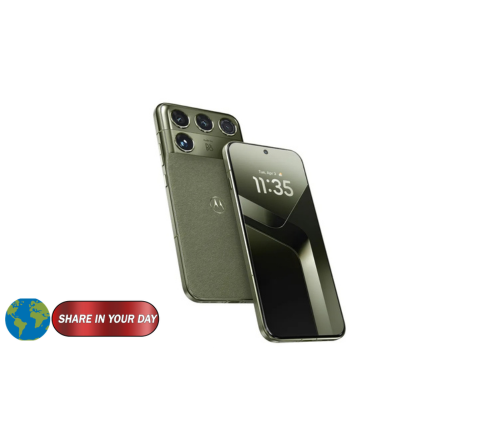
Motorola Signature 27 GrapheneOS Support Is Officially Confirmed
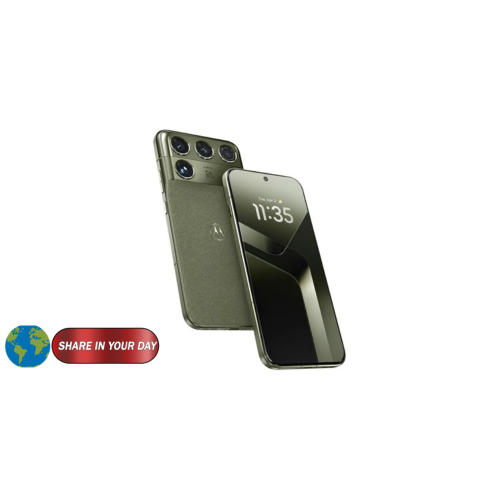
The Motorola Signature 27 GrapheneOS partnership is becoming a reality, marking a major change for users who want a privacy-focused Android smartphone without buying a Google Pixel. GrapheneOS has confirmed that Motorola’s newly unveiled Signature 27 will be the first Motorola phone officially supported by the privacy-focused operating system.
The confirmation answers one of the biggest questions surrounding Motorola and GrapheneOS’s partnership. The companies had previously announced plans to bring GrapheneOS compatibility to future Motorola devices, but the first supported model had not been identified.
Now, that mystery is over.
According to 9to5Google, GrapheneOS confirmed that the Signature 27 will be the initial Motorola device to receive support. The project is also expected to make GrapheneOS available as a pre-installed operating system on supported hardware, although specific details about availability and timing remain limited.
The announcement could make the Signature 27 particularly attractive to consumers who prioritize privacy, security and control over their personal data.
Why the Motorola Signature 27 GrapheneOS Support Matters
For years, GrapheneOS was closely associated with Google’s Pixel smartphones. The operating system is based on the Android Open Source Project but adds extensive privacy and security features designed to give users greater control over applications, permissions and Google services.
That Pixel exclusivity was not simply a marketing decision.
GrapheneOS has specific hardware and firmware requirements that have historically made Pixel devices the primary supported platform. The project has placed particular emphasis on hardware-backed security, memory protection, verified boot and other security technologies.
The Motorola Signature 27 appears to meet the requirements needed for the next phase of GrapheneOS development.
The move therefore represents more than another Android phone gaining compatibility with a custom operating system. It gives GrapheneOS users a credible alternative to Google’s hardware ecosystem.
For consumers, that means choosing GrapheneOS will no longer necessarily mean choosing a Pixel.
What GrapheneOS Brings to Motorola’s New Flagship
GrapheneOS is designed around privacy and security rather than simply adding cosmetic changes to standard Android.
One of its major advantages is that users can maintain tighter control over Google services. Google Play components can be used in a more isolated environment instead of being deeply integrated into the operating system in the same way they are on conventional Android installations.
The operating system also provides additional controls over application permissions and sensitive device functions.
For privacy-conscious users, these features can be especially useful because they provide more granular control over what applications can access.
However, GrapheneOS is not simply about disabling Google services. Its broader goal is to harden the Android platform and make the underlying device more resistant to different types of security threats.
That makes the arrival of the Motorola Signature 27 particularly significant because it combines privacy-focused software with modern flagship hardware.
Snapdragon Hardware Could Be a Key Reason
One of the most important components of the new smartphone is Qualcomm’s Snapdragon 8 Elite Extreme Gen 6 platform.
The Signature 27 was officially unveiled during Qualcomm’s Snapdragon Summit, positioning the phone as a high-end flagship rather than another midrange Motorola device. 9to5Google reports that the new Snapdragon platform is likely a major factor in making the phone suitable for GrapheneOS.
GrapheneOS has previously indicated that its Motorola partnership would focus on higher-end devices capable of meeting demanding security requirements.
This is important because hardware support is one of the biggest challenges facing alternative Android operating systems.
A smartphone can have a powerful processor and still lack the security architecture necessary for a project such as GrapheneOS. Therefore, the Signature 27’s hardware capabilities are potentially just as important as Motorola’s software commitments.
Motorola Signature 27 Could Change the GrapheneOS Market
The biggest impact of the Motorola Signature 27 GrapheneOS support may be the increased choice it gives consumers.
Previously, someone specifically looking for an officially supported GrapheneOS device had a relatively straightforward decision: buy a compatible Pixel.
That situation is now changing.
Motorola is effectively creating another hardware path for users who want a privacy-oriented Android experience. This could also encourage other smartphone manufacturers to consider stronger support for alternative Android distributions.
The move comes at an interesting time for the Android ecosystem.
Privacy has become an increasingly important selling point for smartphones, while consumers are also paying closer attention to data collection, advertising identifiers, application permissions and cloud services.
A flagship phone that combines premium hardware with an operating system specifically designed around privacy could therefore occupy an interesting position in the market.
Signature 27 Is More Than a Privacy Phone
The GrapheneOS announcement is arguably the most interesting software development surrounding the Signature 27, but Motorola is also positioning the phone as a premium flagship.
The company unveiled the Signature 27 with a distinctive camera design and high-end hardware. Reports indicate that the phone features a 200-megapixel camera system, alongside additional cameras designed for different shooting situations.
The device is also being positioned around premium materials and audio capabilities.
Motorola has partnered with Danish audio company Bang & Olufsen for its premium smartphone audio experience. This gives the Signature 27 a broader flagship identity instead of making privacy its only selling point.
That distinction could be important.
Consumers generally want privacy without having to compromise on cameras, performance, display quality or battery life. The Signature 27 is attempting to offer those characteristics alongside a more security-focused operating system.
Seven Years of Updates Could Strengthen the Case
Long-term software support is another important consideration for GrapheneOS compatibility.
A privacy-focused operating system needs a reliable hardware foundation and continued security updates. If a smartphone becomes outdated quickly, its usefulness as a secure long-term device is reduced.
Reports surrounding the Signature 27 indicate that Motorola plans an extended software-support period for the phone. Other reporting has pointed to seven years of updates, helping make the device more suitable for long-term ownership.
That could be particularly valuable for privacy-conscious buyers.
Instead of replacing a phone every two or three years, users could potentially keep the same hardware for substantially longer while receiving security updates.
The combination of modern Qualcomm hardware, long-term support and GrapheneOS compatibility could therefore become one of the Signature 27’s strongest selling points.
GrapheneOS Will Not Necessarily Be Available Immediately
Despite the announcement, buyers should not assume that GrapheneOS will be available on the Signature 27 on day one.
This is one of the most important details that remains unresolved.
9to5Google reports that the exact release timing for the Signature 27 has not yet been confirmed, while the availability of GrapheneOS at launch is also unclear.
The GrapheneOS team has confirmed the device itself, but additional information about installation, sales channels and pre-installed versions is expected later.
That distinction matters because official device support does not automatically mean every retail unit will ship with GrapheneOS.
Motorola and the GrapheneOS Foundation will need to clarify exactly how customers can obtain the privacy-focused operating system.
Will the Signature 27 Ship With GrapheneOS?
One of the most interesting possibilities is that Motorola could sell versions of the Signature 27 with GrapheneOS pre-installed.
That would make the device significantly easier to access for mainstream consumers.
Instead of purchasing a conventional Android phone and then installing an alternative operating system themselves, buyers could potentially select a privacy-focused version directly.
9to5Google reports that devices are still planned to be sold with GrapheneOS pre-installed, although the specific details have not yet been announced.
This could be a major step for GrapheneOS.
Custom Android operating systems have historically appealed to technically experienced users because installing them can require additional knowledge. A commercially available phone with GrapheneOS already installed could lower that barrier considerably.
Motorola and GrapheneOS Have Bigger Plans
The Signature 27 is apparently only the beginning.
Future Motorola devices are also expected to receive GrapheneOS support. Earlier reporting indicated that upcoming versions of Motorola’s Razr Fold and Razr Ultra are planned to support the privacy-focused operating system as well.
This suggests that Motorola and GrapheneOS are building a broader hardware ecosystem rather than treating the Signature 27 as a one-off experiment.
That could eventually give consumers choices across traditional flagship smartphones and foldable devices.
The partnership was first announced by Motorola and the GrapheneOS Foundation at Mobile World Congress 2026. Motorola described the agreement as a long-term partnership focused on future devices engineered for GrapheneOS compatibility.
The Signature 27 is now becoming the first major result of that agreement.
What This Means for Google Pixel
The announcement does not make Pixel phones irrelevant to GrapheneOS.
Google’s Pixel devices remain an important part of the GrapheneOS ecosystem, and the project has extensive experience supporting their hardware.
However, Motorola’s entry changes the competitive landscape.
Consumers can now look at GrapheneOS as software that is gradually becoming independent from one particular smartphone manufacturer.
That is potentially important for the project’s long-term future.
More supported hardware can give users greater freedom while also encouraging manufacturers to build phones with privacy and security requirements in mind.
For Google, meanwhile, the development means its Pixel hardware is no longer the only mainstream route to an officially supported GrapheneOS experience.
A Stronger Privacy Pitch for Motorola
Motorola has increasingly emphasized security and privacy features across its smartphone portfolio.
The company’s existing Moto Secure platform already provides privacy and security controls, while its partnership with the GrapheneOS Foundation takes that strategy considerably further. Motorola has described the partnership as a way to bring advanced mobile security to future devices.
The Signature 27 could therefore become an important showcase for Motorola’s broader security ambitions.
Rather than competing only on camera specifications, processor performance or industrial design, the company now has another way to differentiate its premium phones.
Privacy could become part of Motorola’s flagship identity.