Iran Leaders Tighten Their Grip After Six Months of War
Iran leaders are signaling that the country is preparing for a prolonged confrontation with the United States rather than moving quickly toward a political settlement.
Six months after the United States and Israel launched their military campaign against Iran, Tehran’s ruling system has reorganized around a harder core of military commanders and clerics. The shift comes as Iran faces severe economic pressure, continuing sanctions and uncertainty over the future of negotiations with Washington.
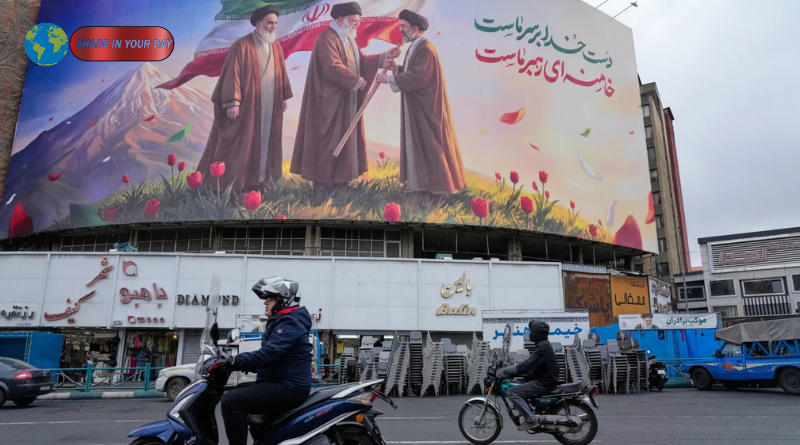
The Associated Press reported that Iran’s leadership has become increasingly focused on two priorities: maintaining resistance against the United States and preventing unrest inside the country. The changes represent a significant development in a war that has already transformed Iran’s political structure.
The conflict began on Feb. 28, when U.S. and Israeli strikes killed Iran’s longtime Supreme Leader Ayatollah Ali Khamenei along with other senior officials. His son, Ayatollah Mojtaba Khamenei, subsequently became Iran’s new supreme leader.
However, the younger Khamenei has remained largely out of public view. His absence has created additional uncertainty around Iran’s decision-making process at a time when the country is under intense military and economic pressure.
Iran Leaders Build a Hard-Line Inner Circle
The latest appointments suggest that Mojtaba Khamenei is relying heavily on figures with long histories inside Iran’s security and military establishment.
Among the most important changes was the appointment of former Revolutionary Guard commander Mohsen Rezaei as secretary of Iran’s Supreme National Security Council. Rezaei previously led the Islamic Revolutionary Guard Corps during much of the Iran-Iraq War and has remained an influential hard-line political figure for decades.
Ahmad Vahidi was also formally confirmed as commander of the Revolutionary Guard. Other senior military officials were confirmed in important positions, including the commander of the Guard’s naval forces and the military chief of staff.
Analysts cited by AP described the appointments as evidence of an effort to strengthen internal cohesion.
Rather than bringing in a new generation of political figures, the leadership has turned toward experienced officials who already have long-standing relationships within Iran’s military and security establishment.
That approach could make the government more resilient during wartime.
It could also make negotiations with Washington more difficult.
Mojtaba Khamenei Remains Out of Public View
One of the biggest questions surrounding Iran’s leadership is the condition and role of Mojtaba Khamenei.
The 56-year-old became supreme leader after his father was killed in the February attacks. AP reported that he has not appeared publicly or through video or audio since then, and he is believed to have been wounded during the strikes.
His continued absence has attracted international attention.
There are two broad explanations. His security team may be keeping him hidden because of the threat of another attack, or his injuries may limit his ability to appear publicly.
Iranian officials have continued to portray the government as functioning normally. Nevertheless, the lack of a public appearance from the country’s highest-ranking leader remains unusual and contributes to uncertainty surrounding Tehran’s political direction.
Reuters also reported that the younger Khamenei has remained unseen for months, while Iranian officials maintain that he remains involved in major decisions.
The situation is particularly important because the supreme leader has enormous authority over Iran’s military and foreign policy.
Iran Leaders Are Preparing for More Internal Unrest
The military appointments are only part of the broader transformation.
The leadership is also strengthening the institutions responsible for controlling domestic dissent.
One of the clearest examples is the appointment of Hossein Taeb as head of the Basij paramilitary force. The Basij operates as a nationwide volunteer network with a major role in maintaining ideological loyalty and responding to protests.
Taeb has extensive experience in Iran’s security apparatus. He previously led the Basij during the 2009 protests and later headed the Revolutionary Guard’s intelligence organization for nearly 13 years.
His return to a prominent security role is significant.
Iran’s economy has deteriorated sharply during the war, increasing pressure on households and businesses. Rising prices and shortages could eventually create conditions for renewed protests.
By putting a veteran intelligence official in charge of the Basij, Iran’s leadership appears determined to prevent dissatisfaction from developing into a broader political challenge.
The objective is not simply to respond to protests after they begin.
It is to deter them before they become a serious threat.
Economic Pressure Is Becoming a Major Threat
Military confrontation is not the only challenge facing Iran.
The country’s economy is under intense pressure from sanctions, disrupted trade and restrictions on oil exports.
The Iranian government has acknowledged the severity of the situation. Reuters reported that President Masoud Pezeshkian said foreign trade had fallen substantially and that annual inflation had reached extremely high levels. He has also warned about the difficulties created by sanctions and the U.S. blockade.
The economic crisis creates a complicated political problem for Tehran.
On one hand, hard-line officials argue that backing down under American pressure would weaken Iran’s strategic position.
On the other hand, moderates warn that continuing the confrontation could impose an even heavier burden on ordinary Iranians.
This disagreement is becoming one of the most important internal debates in the country.
Pezeshkian Pushes for a Diplomatic Solution
Iranian President Masoud Pezeshkian has emerged as one of the most prominent voices calling for negotiations.
According to AP, Pezeshkian has argued that ending the war could preserve Iran’s position while preventing additional economic damage. He has also defended the June ceasefire arrangement against criticism from hard-line factions.
The disagreement does not necessarily mean Iran’s political system is on the verge of collapse.
Instead, it shows that different factions have different ideas about how Tehran should survive the current crisis.
Moderates see diplomacy as a way to reduce economic pressure.
Hard-liners see continued resistance as necessary to preserve the Islamic Republic’s political and ideological foundations.
That divide could become more important if economic conditions continue to worsen.
Iran Leaders Still Leave the Door Open to a Deal
Despite the increasingly hard-line composition of the leadership, negotiations have not been completely ruled out.
Mohsen Rezaei has indicated that Iran could consider an agreement if Washington changes its approach and implements the conditions associated with the earlier ceasefire.
That position is different from an outright rejection of diplomacy.
Instead, Tehran appears to be demanding significant concessions before returning to negotiations.
Iran has sought the release of billions of dollars in frozen assets and has demanded authority over the strategic Strait of Hormuz as part of the broader dispute.
The Strait has become one of the most important pressure points in the conflict.
The waterway is critical to global energy markets, making any prolonged disruption potentially damaging well beyond the Middle East.
The Strait of Hormuz Adds Global Economic Risk
Iran’s control over access through the Strait of Hormuz gives Tehran a powerful economic lever.
The waterway carries a major share of global oil shipments, meaning disruptions can quickly affect energy prices, shipping costs and inflation.
Iranian officials have repeatedly linked the reopening of the strait to broader political demands.
Rezaei recently warned that if the economic war against Iran continues, Tehran could prevent oil from leaving the Persian Gulf. AP reported his warning as evidence that Iran’s leadership is prepared to use the waterway as a major bargaining tool.
For Washington and its allies, this creates a difficult strategic calculation.
Increasing military pressure could force Iran to retaliate against regional infrastructure or shipping.
Reducing pressure, however, could allow Tehran to claim that its resistance strategy succeeded.
The result is a conflict in which both sides face significant risks from escalation.
Six Months of War Have Changed Iran’s Political System
The most important development may be the fact that the war has not produced the political collapse that some observers initially expected.
Instead, Iran’s government has survived the loss of its supreme leader and other senior officials.
It has also reorganized its military command structure and strengthened security institutions.
The result is a leadership system that appears more centralized around hard-line military and clerical figures.
That does not mean Iran is politically stable.
The country still faces economic hardship, internal disagreements and the continuing danger of military escalation.
But the evidence so far suggests that the war has strengthened the influence of officials who favor resistance rather than compromise.
What Comes Next for Iran Leaders?
The next phase of the conflict could depend on three major factors.
First, Iran’s economic situation will determine how much pressure the government can absorb. If inflation, unemployment and shortages continue to worsen, moderates could gain stronger arguments for negotiations.
Second, the military balance will remain critical. Iran has demonstrated an ability to continue operating despite major losses, while the United States faces its own questions about military resources and the sustainability of a prolonged campaign.
Third, the Strait of Hormuz will remain a central bargaining chip.
Any agreement that leaves the waterway contested could remain vulnerable to renewed confrontation.
For now, Iran’s leadership appears to believe that time can work in its favor.
Washington may want economic pressure to force Tehran into concessions. Tehran, meanwhile, appears determined to demonstrate that military pressure cannot easily remove the Islamic Republic or force it to accept Washington’s terms.
That creates the possibility of a long standoff.
A Harder Iran Emerges From the Conflict
Six months into the war, Iran looks different from the country that entered the conflict in February.
Its previous supreme leader is dead. A new and largely unseen supreme leader has taken power. Military commanders and security officials have gained greater influence, while moderates continue to argue that diplomacy is necessary to prevent economic devastation.
The appointment of figures such as Mohsen Rezaei, Ahmad Vahidi and Hossein Taeb points toward a government that is prioritizing security, unity and resistance.
At the same time, Iran’s economic problems cannot simply be ignored.
That tension may ultimately determine the country’s future.
For now, the Iran leaders overseeing the country appear unwilling to accept an agreement that they believe would amount to surrender. They are preparing for continued confrontation while simultaneously trying to prevent economic hardship from turning into another wave of domestic unrest.
The war’s original political objectives may therefore have produced an unexpected result.
Rather than removing Iran’s ruling system, the conflict has helped consolidate power around some of its most experienced hard-line figures.
Whether that strategy can survive prolonged economic pressure remains one of the biggest questions facing Iran — and the wider Middle East.