NATO Russia Threat Draws Fresh Warning From Denmark
The NATO Russia threat has come under renewed scrutiny after Danish intelligence warned of a low but growing risk that Russia could launch a limited military attack against one or more NATO countries bordering Russia.
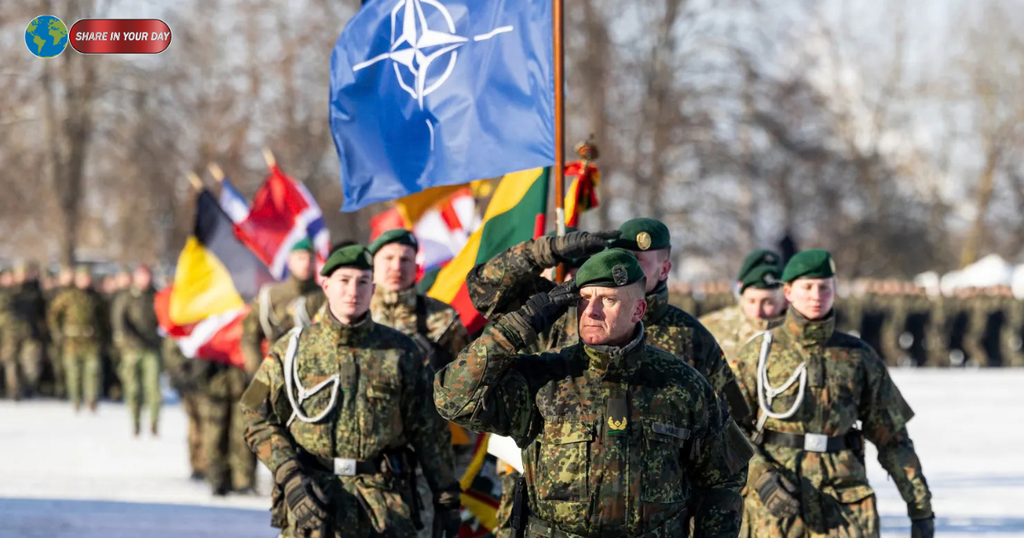
The warning comes as NATO increases intelligence-sharing in response to a series of incidents that Western officials have linked to Moscow. NATO’s top military commander, U.S. Air Force General Alexus Grynkewich, said the alliance has the mechanisms and capabilities needed to manage the risks, while stressing that NATO should remain calm and confident. IInvesting.com+1
The latest developments add another layer of tension to Europe’s security environment as Russia’s war against Ukraine continues into its fifth year.
Denmark’s Defence Intelligence Service, known as DDIS, said Russia was likely to intensify what it described as hybrid warfare against Western countries in the coming months. The assessment includes activity below the threshold of conventional war, such as sabotage, cyberattacks and other disruptive operations. SSky News
NATO Russia Threat: What Denmark Warned
The Danish intelligence assessment did not say that a Russian invasion of a NATO country was imminent.
Instead, it described a low but growing risk that Moscow could carry out a limited military attack against one or more NATO members bordering Russia.
DDIS chief Thomas Ahrenkiel said an outright Russian invasion of a NATO country remained highly unlikely, but could not be ruled out. The assessment also warned that Moscow could intensify hybrid operations targeting Western countries. Eeuronews+1
That distinction is important.
The warning concerns a range of potential activities rather than a prediction that Russia is preparing a full-scale invasion of a NATO member.
The countries bordering Russia within NATO include Finland, Norway, Estonia, Latvia, Lithuania and Poland.
Russia-Ukraine War Remains at the Center
The security concerns are closely connected to the ongoing Russia-Ukraine war.
Since Russia launched its full-scale invasion of Ukraine in February 2022, NATO countries have provided military, financial and political support to Kyiv.
Western governments have repeatedly warned that Russia could attempt to undermine that support through activities that fall short of conventional military conflict.
According to the Danish assessment, earlier Russian hybrid operations were largely intended to create fear and weaken Western public support for assistance to Ukraine.
The assessment said the focus had increasingly expanded toward efforts to interfere with the delivery of military support itself, including potential sabotage involving defence companies and railway transportation. Eeuronews
NATO Increases Intelligence-Sharing
NATO is responding by increasing intelligence-sharing among member states.
Grynkewich, NATO’s Supreme Allied Commander Europe, said the alliance was concerned about a series of recent incidents but maintained that NATO had the tools and mechanisms necessary to manage the threat. IInvesting.com
The increased sharing of intelligence reflects a broader effort to detect potential threats earlier.
For NATO, identifying suspicious activity across multiple countries can help governments establish whether apparently isolated incidents are connected.
The approach also allows member states to coordinate responses to cyberattacks, sabotage attempts and other activities that may not amount to conventional military aggression.
Russian Involvement Remains Disputed
Russia has repeatedly denied involvement in hybrid warfare and sabotage operations in NATO countries.
That means allegations involving Moscow must be distinguished from independently established facts.
Western governments and intelligence agencies have attributed a number of incidents to Russian-linked activity, but Moscow has rejected such accusations.
The Danish warning therefore represents an assessment by Denmark’s intelligence service rather than proof that every future incident in Europe would originate from Russia.
This distinction is especially important when assessing reports about potential military escalation.
General Says NATO Is Prepared
Grynkewich said a limited Russian attack on NATO territory was unlikely but something the alliance could not completely rule out.
He also rejected suggestions that Russia might see an opportunity to challenge NATO because of strains on U.S. military resources.
The NATO commander emphasized that the alliance remained positioned to defend its territory and deter aggression. IInvesting.com
His comments were intended to reassure European allies while acknowledging the changing security environment.
NATO is also undergoing changes in how responsibility for European defence is distributed.
Europe Is Taking a Larger Security Role
The alliance is adjusting to pressure for European members to take greater responsibility for their own defence.
The shift comes as the United States reviews its military posture in Europe.
Grynkewich said Washington would continue providing critical capabilities to NATO but suggested that European allies would increasingly take on a larger role. He said there was no predetermined outcome regarding the number of U.S. troops that would remain in Europe or which capabilities could eventually be relocated. IInvesting.com
Around 80,000 U.S. troops are currently based in Europe, according to the Reuters report.
The question of the long-term U.S. military presence is therefore closely linked to broader European discussions about defence spending, military readiness and NATO’s future structure.
Why Denmark’s Warning Matters
Denmark’s warning has attracted attention because of its location and strategic position.
Denmark is a NATO member and has significant interests in the Arctic and northern Europe. The country also has responsibility for the defence relationship involving Greenland, an increasingly important strategic area because of its geographic position.
Earlier this week, Denmark, Greenland and the United States agreed to expand cooperation on Arctic security, including an expanded U.S. military presence in Greenland. Reuters reported that the agreement would place greater emphasis on NATO’s role in Arctic security. RReuters+1
The Arctic has become increasingly important for Russia, the United States and European countries.
Military access, missile-warning systems, shipping routes and strategic geography all contribute to the region’s importance.
Denmark Has Also Accelerated Ukraine Support
The latest warning follows another confrontation involving Denmark and Russia.
On September 15, Denmark said a Russian frigate fired flares toward a Danish military helicopter as the aircraft attempted to photograph the vessel in international waters.
Moscow disputed Denmark’s characterization of the incident and accused the Danish aircraft of conducting dangerous manoeuvres near the Russian ship.
Following the incident, Denmark announced that it would accelerate a military aid package for Ukraine worth about 1.8 billion Danish crowns, or approximately $276 million at the exchange rate cited by Reuters.
The package is intended primarily to strengthen Ukraine’s air-defence capabilities. RReuters
Danish officials said the incident would not persuade Copenhagen to reduce its support for Ukraine.
What Is a Hybrid Attack?
The term hybrid warfare has become increasingly common in European security discussions.
It generally refers to activities designed to pressure or destabilize another country without launching a conventional military invasion.
These activities can include:
- Cyberattacks
- Sabotage
- Disinformation campaigns
- Espionage
- Infrastructure disruption
- Interference with logistics
- Attempts to influence public opinion
- Covert operations
The advantage for an aggressor is that such activities can remain below the threshold of traditional warfare.
That can make attribution more difficult and create uncertainty about how the targeted country should respond.
The Danish intelligence assessment warned that Russia could increase these types of operations against Western countries in the coming months. Eeuronews
Baltic Region Remains a Security Focus
Several NATO countries bordering Russia are located in northern and eastern Europe.
Estonia, Latvia, Lithuania, Finland, Norway and Poland have all paid particular attention to Russian military activity since the full-scale invasion of Ukraine.
The Baltic states are especially sensitive to the issue because of their geographic position and proximity to Russia.
All three joined NATO in 2004 and have consistently emphasized the importance of collective defence.
NATO’s Article 5 principle means an armed attack against one member is treated as an attack against the alliance as a whole, although the specific response is determined by member states.
That collective-defence framework is central to European planning around the Russia threat.
Putin and NATO Remain Locked in a Dangerous Security Environment
Russian President Vladimir Putin has repeatedly criticized NATO expansion and Western military support for Ukraine.
Western governments, meanwhile, view Russia as the principal military threat to European security.
The latest Danish assessment does not establish that Putin has decided to attack a NATO country.
Instead, it identifies circumstances under which the risk could increase and urges governments to prepare accordingly.
That difference matters because intelligence assessments describe risks and possibilities. They do not necessarily indicate that a particular military operation has been ordered.
NATO Seeks to Avoid Escalation
At the same time, NATO officials are emphasizing preparedness rather than predicting war.
Grynkewich said the alliance should be calm and confident while acknowledging that the recent incidents were concerning. IInvesting.com
That messaging reflects a delicate balance.
NATO wants to deter Russia by demonstrating that the alliance is prepared to defend its members. But governments also have an interest in preventing public statements from unnecessarily escalating tensions.
The result is a combination of military preparedness, intelligence cooperation and diplomatic messaging.
The U.S. Role Is Changing
The United States remains NATO’s most powerful military member, but European allies are increasingly being asked to provide more of their own defence capabilities.
The change has accelerated under President Donald Trump, who has repeatedly argued that European NATO members should shoulder more of the burden for continental security.
The current NATO restructuring includes greater European responsibility for command positions and military capabilities. IInvesting.com
For European governments, the challenge is to increase military capacity while maintaining NATO’s collective defence system.
That includes air defence, ammunition production, intelligence capabilities, cyber defence and the ability to move military forces quickly across Europe.
What Happens Next?
The immediate focus is likely to remain on intelligence-sharing and monitoring of potential Russian activity.
NATO members will also continue watching developments around Ukraine and the alliance’s eastern borders.
Denmark’s intelligence warning is one part of a wider series of assessments from European security agencies about possible Russian hybrid operations.
At the same time, Western governments continue to support Ukraine militarily.
Recent Danish decisions demonstrate how incidents involving Russia can directly influence European defence policy. RReuters
NATO Russia Threat: What Consumers and Businesses Should Know
For ordinary Europeans, the latest warnings do not mean that a conventional war between NATO and Russia has begun.
Instead, the warnings highlight the possibility of disruptions that can affect civilian infrastructure.
Cyberattacks, interference with transportation, attacks on communications infrastructure and other forms of disruption could have consequences beyond the military sector.
Businesses operating critical infrastructure are therefore among the organizations paying close attention to the changing threat environment.
Governments are also strengthening resilience against cyberattacks and other forms of hybrid activity.
A Warning, Not a Prediction
The most important distinction in the latest developments is between risk assessment and prediction.
Danish intelligence says the risk of a limited Russian attack against a NATO country bordering Russia is low but growing.
It simultaneously says a Russian invasion of a NATO country remains highly unlikely.
NATO’s military leadership says the alliance is prepared for possible aggression while urging members to remain calm.
Russia denies involvement in the hybrid activities attributed to it by Western governments.
Taken together, these developments point to a tense European security environment rather than evidence that a NATO-Russia war is inevitable.
Bottom Line
The NATO Russia threat is receiving renewed attention after Denmark’s intelligence service warned that the risk of a limited Russian military attack against one or more NATO countries bordering Russia has grown.
At the same time, Denmark expects Moscow to increase hybrid operations, including potential sabotage and cyber activity targeting Western countries and infrastructure connected to support for Ukraine. Eeuronews+1
NATO is responding by increasing intelligence-sharing and emphasizing its readiness to defend alliance territory.
The developments come as European countries take on a larger role in their own defence and as the Russia-Ukraine war continues.
For now, the available assessments describe a low but growing risk, not an announcement that Russia is preparing an imminent invasion of NATO.
Key Facts
- Main concern: A low but growing risk of a limited Russian attack against a NATO country bordering Russia.
- Assessment: Denmark’s Defence Intelligence Service.
- NATO response: Increased intelligence-sharing.
- Broader concern: Russian hybrid activity, including possible sabotage and cyberattacks.
- Russia’s position: Moscow has denied involvement in hybrid warfare or sabotage operations in NATO countries.
- Ukraine: Western support for Kyiv remains a central factor in the security environment.
- Denmark: Copenhagen recently accelerated a roughly $276 million Ukraine military aid package after an incident involving a Russian warship and Danish helicopter. R
Reuters
- U.S. role: Washington is expected to continue providing important NATO capabilities while European allies take on greater responsibility. I
Investing.com
Sources
- Reuters — NATO intelligence-sharing and Russia threat assessment. I
- Reuters — Denmark, Russia and Ukraine military aid developments. R
- Reuters — Greenland, Denmark and U.S. Arctic security agreement. R
- Euronews — Danish intelligence assessment. E
euronews
- Sky News — Russia-NATO threat assessment. S
Sky News
Internal links: Add 2–3 relevant articles from your target website covering NATO, Russia, Ukraine, European security or international affairs. No target domain was provided, so no internal URLs have been invented.